Creators
How to Vet an Influencer Before You Approve the Spend
 Kaan Gural · Oct 21, 2026
Almost every guide to influencer vetting is really a guide to fraud detection. Fake followers, engagement pods, bot comments, growth spikes. Worth checking.
But think about the last influencer campaign that disappointed you. It probably was not a fraud. The creator was real, the audience was real and the engagement was real. It underperformed anyway, and nobody could say precisely why.
That is the more common failure, and almost no vetting process catches it. Catching it means asking questions about your audience, your shortlist and your budget rather than about the creator. Fraud detection tells you a creator is not fake. It does not tell you they are right.
Here is the process that does.
Key takeaways
- Influencer vetting is the process of evaluating a creator's legitimacy, audience, performance history and cost before you commit budget to a partnership.
- Define your audience before you look at creators. Every check that follows is measured against that definition.
- Audience authenticity and audience relevance are separate tests. A completely real audience can still be the wrong audience.
- Vet your shortlist as a set, not one creator at a time. Five creators in the same category can pass every check individually and still share most of the same followers.
- Work out what a creator has to deliver for their fee to make sense before you agree to it. If you cannot answer, that is the finding.
What is influencer vetting?
Influencer vetting is the process of evaluating a creator before you enter a paid partnership, covering their legitimacy, the audience behind them, their performance history and whether the fee is justified by what you expect to get back. You will also see it called creator vetting, influencer screening or influencer due diligence. It sits after discovery: discovery builds the shortlist, and vetting decides who stays on it and what you are willing to pay them.
Why influencer vetting is important
Influencer vetting is important because it determines where your creator budget goes and whether that decision can be justified later. Done properly, it protects the brand from a bad partner and the budget from a poor bet. Most processes only deliver the first.
Vetting does two jobs. Risk screening asks what could go wrong: is the audience real, is the engagement genuine, is there anything in their history that would embarrass us. It tells you whether a partnership is permissible. Investment evaluation asks what is likely to happen and whether it is worth the money: is this the audience we need, how much of it are we already reaching through other creators, and what does this creator have to deliver to justify their rate. It tells you whether a partnership is worth approving.
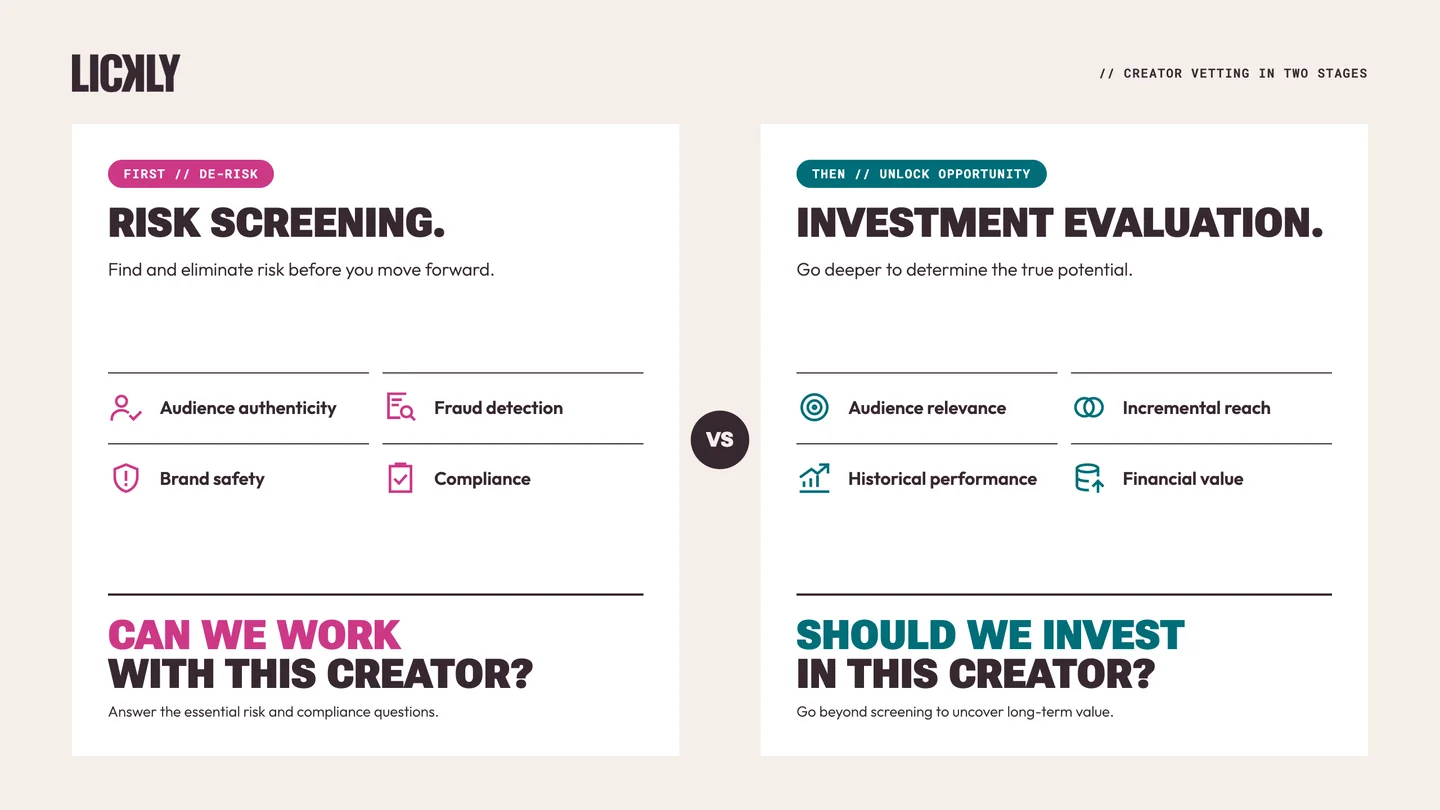
Most teams finish the first job and stop. The research shows it clearly. Marketers rank performance history (27.4%), engagement rate (23.1%) and content quality (15.4%) as their top evaluation priorities. All three describe the creator. None describe the audience you are paying to reach, and none involve the fee.
Four costs follow, and the first three look like bad luck:
- You reach the wrong people efficiently. The audience was real, engaged and not yours.
- You pay four creators to reach one audience. Separate invoices, overlapping followers.
- You get a result nobody can explain. No expectation was set, so there is nothing to compare the outcome against.
- You cannot defend the spend. The creator passed the checks, which is a fact rather than a reason.
None of those show up in a fraud check. Reach looks good, engagement performs, and the gap between reach and relevance is where creator budget can quietly go.
The last cost is the one that follows you into the next meeting. Over half of marketers spend 30 minutes or less vetting a single influencer. And while 96.6% of brands want documentation on their vetting process, only 25.6% consistently receive it. Half an hour of work, and usually nothing written down at the end of it. So when a VP or a client asks why this creator, "they passed the checks" is the only available answer. And a creator can clear every safety check and still be the wrong investment.
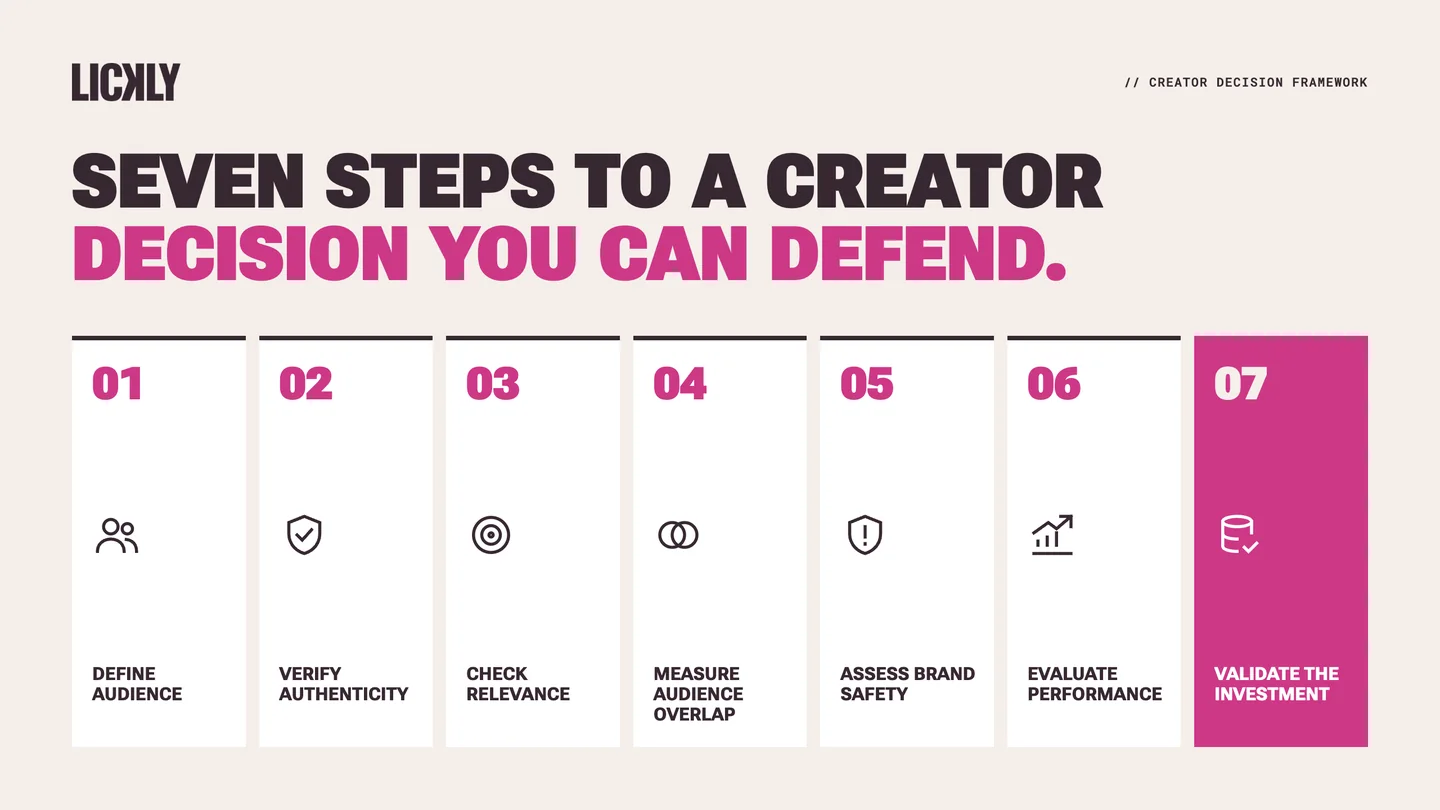
The influencer vetting process, step by step
- Define the audience before you evaluate influencers
- Check influencer credibility and audience authenticity
- Check the influencer's audience quality and relevance
- Check audience overlap across your influencer shortlist
- Audit content history and influencer brand safety
- Look for evidence of influencer performance
- Work backwards from the influencer's fee
Step 1: Define the audience before you evaluate influencers
Almost everyone starts with creators. Decent following, good content, right category, onto the shortlist. But a follower count tells you how many people a creator reaches, not whether those people are your buyers.
So flip the order. Two things, before you look at anyone.
What the campaign has to achieve. Your goal changes which creator you need. If you want awareness, look for reach and creators who tell a good story. If you want sales, look for creators whose audience trusts them, and who can show that their past sponsored posts actually drove results.
Who you need to influence, specific enough to test. "Women 25 to 40 interested in skincare" is a targeting preset, not an audience. Get to what they buy, which communities they trust, and what problem your product solves in the language they use for it.
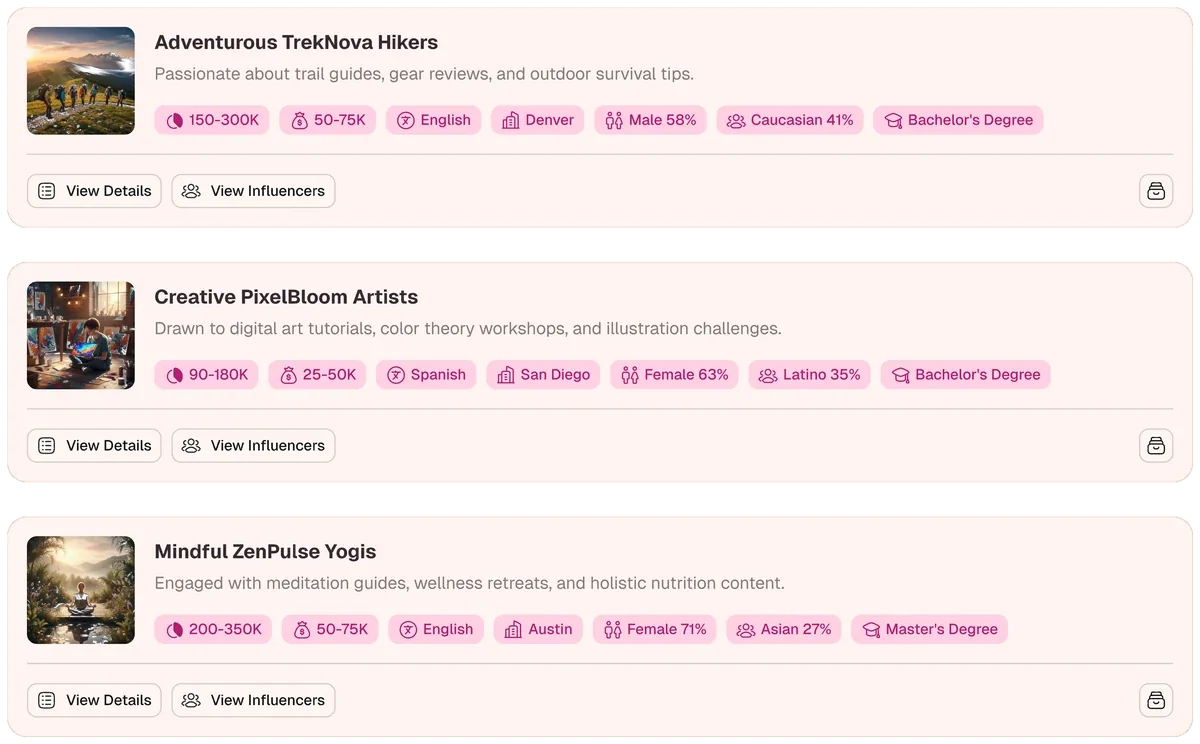
This is where Lickly's audience-first approach fits. Rather than starting from a creator database and filtering down, it builds the audience first, surfaces what shapes that audience's decisions, then uses that to guide creator selection. Reading a creator's audience properly by hand is slow, which is why lean teams skip it.
Write the definition down, because three later steps depend on it. You will check creators against it when you test audience relevance, use it again when you check how much your shortlist overlaps, and use its size when you work out whether a creator's fee makes sense. If the definition stays vague, all three checks become opinions.
Step 2: Check influencer credibility and audience authenticity
This is the check you already run, so run it well and move on. Everything here answers one question: is there a real person with a real audience behind these numbers?
Follower growth. Organic growth leaves evidence behind. A spike should have something attached to it: a viral post, a press mention, a collaboration, a trend they caught early. When there is no explanation, the absence is the finding. Ask the creator. A credible explanation should be specific and, where possible, verifiable.
Engagement in context. An engagement rate only means something next to comparable creators. The same figure can be healthy for a large account and poor for a small one, and category norms vary widely, so a beauty creator and a B2B creator cannot be read off the same scale.
The comment section, read properly. Twenty to thirty comments, scrolled past the top of the thread. Genuine engagement is uneven and specific: questions, disagreements, personal stories, references to something actually in the post. Watch for the same handful of accounts on every post within minutes of publication, and generic praise repeated across unrelated content.
Passing this step tells you the audience exists. It tells you nothing about whether that audience is yours, and a clean authenticity check on the wrong audience is the most expensive kind of pass, because it feels like diligence.
Step 3: Check the influencer's audience quality and relevance
Authenticity and relevance get folded together as audience quality constantly, and they are separate tests. The last step asked whether the followers are real. This one asks whether they are the people you defined at the start.
Geography is one of the most common mismatches. Algorithmic reach and one viral post can pull a following from markets a creator has never made content about, and a brand launching in the US gains little from a creator whose audience is majority outside it, however strong the engagement looks.
Interest affinity is the more useful signal. Demographics tell you who follows. Affinity tells you why. Look at the other brands, creators, topics and communities that audience engages with, and whether the creator sits inside the conversations that shape category decisions or simply produces content adjacent to them.
Loyalty is the third. Recurring commenters, repeat viewers, consistency across formats. An audience that turns up for giveaways and disappears is not an audience you can influence.
Then the part most teams skip: check where the data came from. A media kit is self-reported, assembled by the person you are evaluating, usually from the period that flattered them most. Treat it as a claim, not as evidence, and request platform-level exports covering audience demographics and location.
Running these checks by hand, across a full shortlist, is where most teams run out of time. It is also what the Lickly Score is for. Every creator on an audience list is scored against that specific audience segment across four components: how closely their content matches the segment's interests, how consistently they perform, how well their followers match the demographics you defined, and how closely their location lines up.
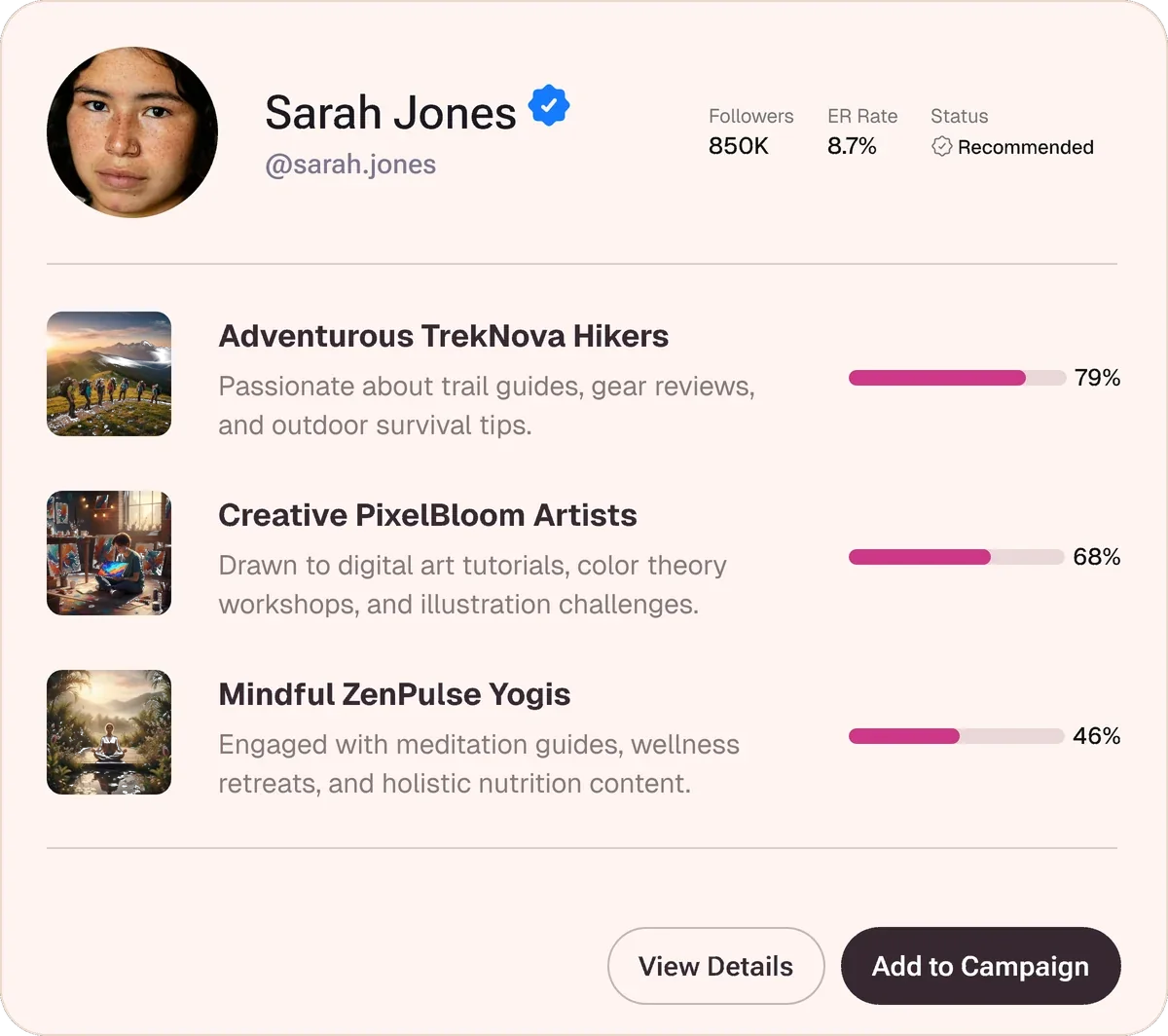
The result is a single number you can sort a shortlist by, with the breakdown behind it, so you are comparing creators on fit rather than on follower count. A fit score is only as useful as the definition behind it, which is why this one is calculated against the audience segment you defined rather than against the creator in isolation.
Step 4: Audit content history and influencer brand safety
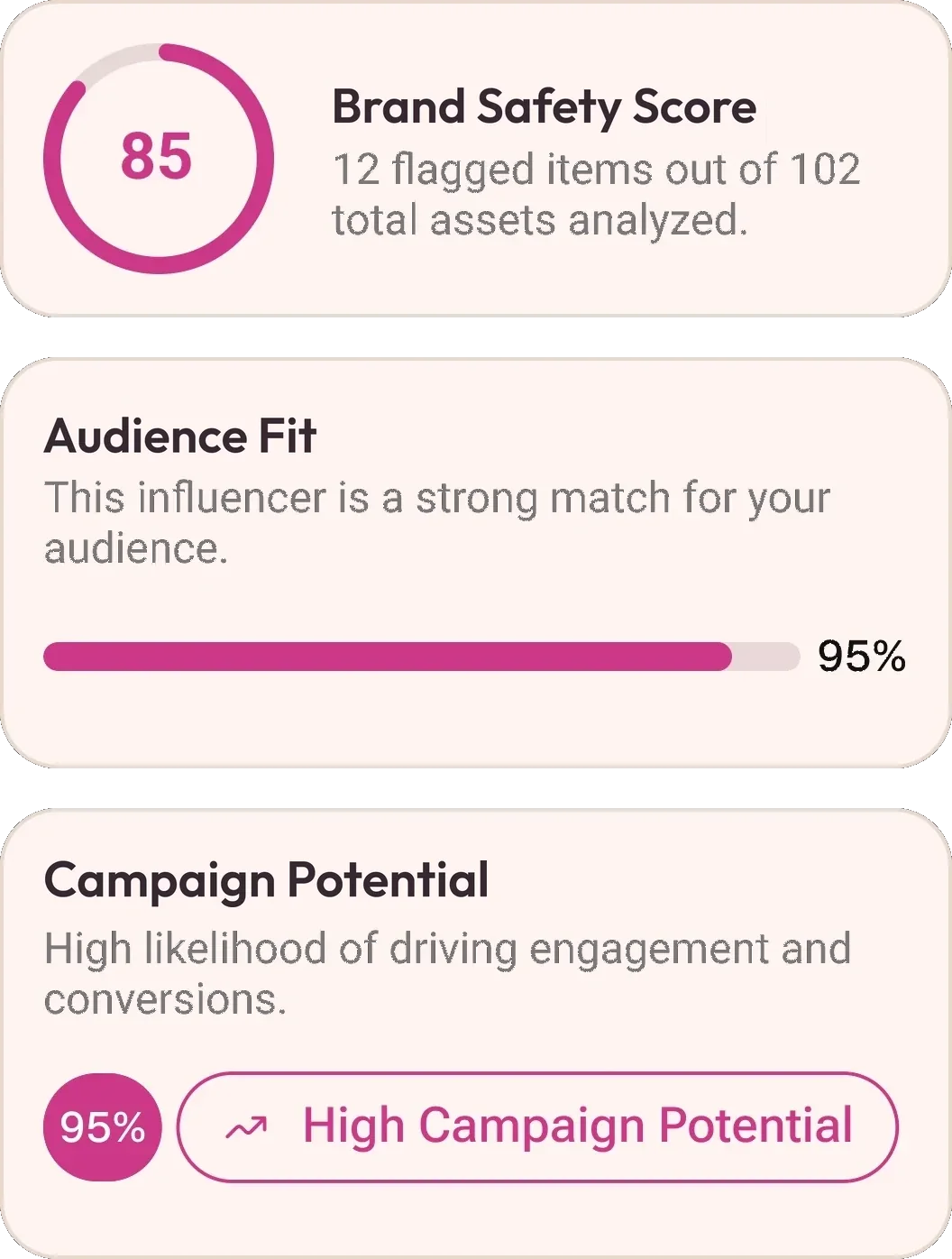
Recent posts are not a history. Most brand safety problems come from content published months or years earlier, and a creator can have changed considerably since then while the old content still shapes how audiences react when it resurfaces.
The scale of what a quick check misses is worth sitting with. A 30-minute review covers roughly 0.01% of a creator's content history. If your process is a scroll through the last few months, you have not audited anything. You have sampled.
What to cover: the content history at depth rather than the recent grid, comment sections for patterns of community behaviour, bio links and existing brand affiliations including competitors, and a plain search of their name for anything that never reached social. Then two things most guides miss. Visual risk, because caption and transcript screening only catches what a creator wrote down or said out loud, not what appears in frame. And disclosure history, since a pattern of undisclosed paid posts is a compliance exposure under the FTC's endorsement guides rather than a matter of taste.
Consistency matters more than production polish. The question is not whether the content is beautiful. It is whether your product would look native in it, or like an ad they agreed to run.
Step 5: Check audience overlap across your influencer shortlist
Here is the check almost nobody runs, and it is the one that structurally cannot be done creator by creator. Overlap is not a property of any single creator. It is a property of your list.
Five creators in the same category can each pass steps 1 to 3 cleanly and still share most of the same followers. You approve five, you pay five and you reach roughly one audience, five times. The invoices are separate. The reach is not. Nothing on a public profile will tell you this, which is precisely why it survives most vetting processes intact.
Two things to establish before you approve a shortlist. How much each creator adds once the others are counted, rather than how large each one is on their own. Reach that duplicates reach you already bought is not reach. And how recently that audience has seen you, or seen a competitor, because the fifth message to the same people is worth less than the first.
Timing belongs here too. If a key segment is in-market early in the week and your shortlisted creators all post at the weekend, the shortlist is technically fine and practically late. This is where audience-first planning does the work a profile cannot, because it starts from the segment and shows how much of it each creator genuinely reaches.
Step 6: Look for evidence of influencer performance
By this point you know the creator is real and the audience is right. This step asks whether there is any evidence they can deliver, which is a different question from whether they look capable.
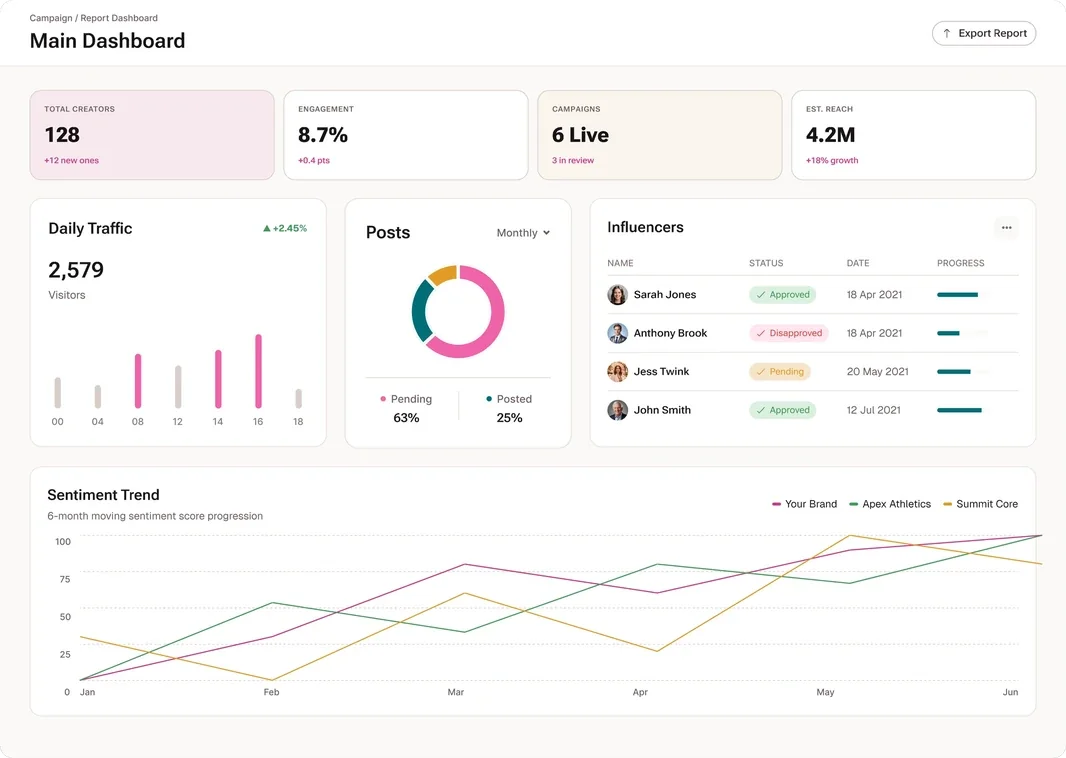
Ask for first-party data. Platform exports covering reach, impressions, story views, audience demographics, link clicks and profile visits. Public metrics can look healthy while reach quietly declines behind them, and only the creator can show you the difference. If they will not, that is information.
Read past partnerships properly. Not whether they have done brand work, but whether brands came back, whether the categories are adjacent to yours, and how sponsored posts performed against that creator's own organic baseline. That last ratio can be one of the most diagnostic numbers available to you, yet it is often overlooked. An audience that engages with everything except the paid posts is telling you something specific.
Match format to objective. Short-form drives awareness, detailed reviews drive consideration, demonstrations work when the product needs explaining. A creator who excels at one can underperform badly at another, so judge them on the format your campaign actually needs rather than their best work overall.
Watch how they handle vetting. Response times, thoroughness, whether they follow instructions. Communication problems do not improve after signature. Creators who discuss what went wrong in past campaigns and what they changed are describing capability. Creators whose every partnership was flawless are describing a pitch.
Step 7: Work backwards from the influencer's fee
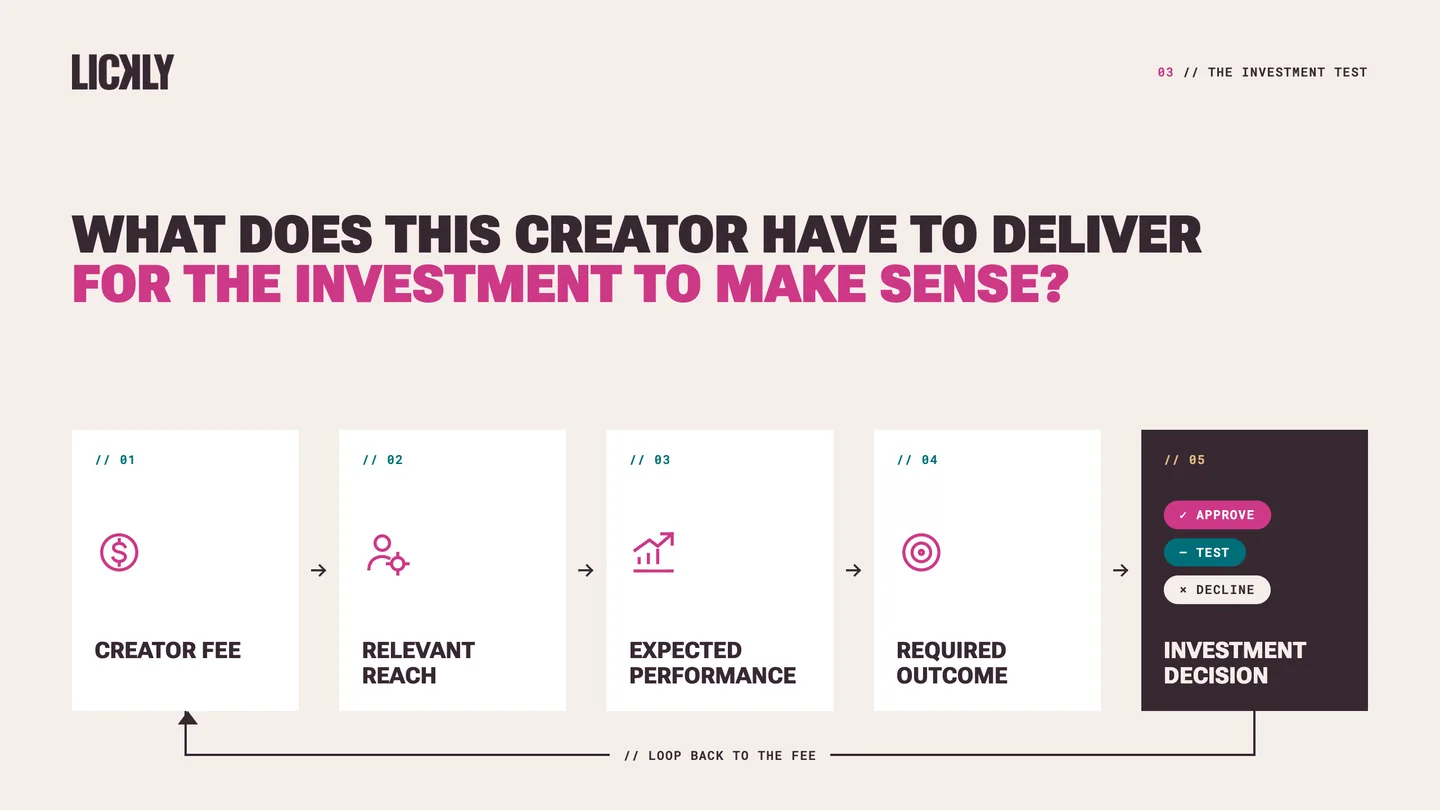
Every step so far has been about the creator or their audience. This one is about the money, and it is the step that turns vetting into a decision.
Comparing a rate against category benchmarks tells you whether it is normal. It does not tell you whether it is worth paying. For that, start from the fee and work backwards. Take the rate, the relevant reachable audience you established in step 3, and your own historical conversion rate for comparable work. That gives you the outcome this creator has to produce for the spend to make sense. Every number in that calculation is yours, not an industry average, and that is the point.
For creators who are not comparable, normalise. Cost per relevant reachable follower is cruder than a model and immediately usable: a smaller creator at a fraction of the fee, reaching an audience that is 80% relevant, may represent a better investment than a larger one reaching an audience that is 20% relevant at ten times the price.
Then the case nobody writes about. Sometimes you cannot answer, because you have no historical baseline to reason from. That is a legitimate output and it is better than a confident guess. The options are to reduce the commitment, run one paid post as a test, ask for performance-linked terms, or decline. What you should not do is approve the spend and hope the reporting explains it later, which is where wasted marketing spend actually starts.
The pre-payment influencer vetting checklist
Run this before the invoice.
Audience and objective
- Is the campaign objective written down, and does it imply the creator qualities you are testing for?
- Is the target audience defined specifically enough to be tested against?
Legitimacy
- Does follower growth have an explanation for every spike?
- Is the engagement rate in line with comparable creators, not an absolute figure?
- Did you read 20 to 30 comments past the top of the thread?
Relevance
- Does audience geography match your commercial markets?
- Does interest affinity put them inside the communities you care about, not adjacent to them?
- Did the audience data come from platform exports rather than a media kit?
Shortlist
- Do you know how much each creator adds once the others are counted?
- Has this audience seen you, or a competitor, recently?
Content and safety
- Did you audit the content history at depth, not just the recent grid?
- Did you check for in-frame risk, not only captions and transcripts?
- Is their disclosure history clean?
Performance and fee
- Do you have first-party performance data rather than claims?
- Do you know how their sponsored content performs against their organic baseline?
- Have you calculated what they need to deliver for the fee to make sense?
- Have you written down which audience this creator was chosen to reach, and what you expect them to deliver?
Frequently asked questions
What is influencer vetting?
Influencer vetting is the process of evaluating a creator before a paid partnership, covering audience authenticity, audience relevance, content and brand safety, performance history and whether the fee is justified. It is also called creator vetting or influencer due diligence. The purpose is to identify problems before budget is committed rather than after.
What is the difference between influencer discovery and influencer vetting?
Discovery finds potential creators and builds a shortlist. Vetting evaluates whether those creators deserve investment and decides who stays on the list. Discovery is about volume and reach. Vetting is about fit, risk and price.
How do I check if an influencer has fake followers?
Look for patterns rather than single data points. Unexplained follower spikes. Engagement climbing while reach stays flat. Repetitive comments from the same accounts. Audience locations that do not match where the creator posts. One is a question. Several together is an answer. Checking this by hand works for one creator but not a shortlist, which is why Lickly scores every creator automatically.
How should vetting differ for micro and macro influencers?
For smaller creators, weight community trust, comment quality and niche authority, since the audience relationship is the asset. For larger creators, weight audience composition and historical campaign performance, because reach at that scale hides more variance and the fee is larger. Both need the same brand safety work, and exposure rises with audience size.
How long should influencer vetting take?
There is no single timeframe for influencer vetting because it depends on the creator, campaign and depth of review. It should go beyond the quick profile check many teams rely on. The real time goes into content history, performance data and the fee calculation. Lickly scores a whole audience list at once, so your hours go to the judgement calls that need a person.
Vet like it is a spend decision
A process that only asks whether a creator is legitimate will keep producing partnerships that pass and campaigns that disappoint. The seven steps above ask a harder question: is paying this creator a decision you would stand behind if it underperforms?
Answering that takes three things most vetting skips. An audience definition written down before you look at anyone. An honest look at your shortlist as a set rather than a list of individuals. And a number you worked out before the money moved.
That is the difference between approving a creator and making a marketing decision you can defend. Lickly turns audience, creator and campaign intelligence into recommendations you can act on before the budget moves, so you know where every dollar is going and why. Book a demo.