
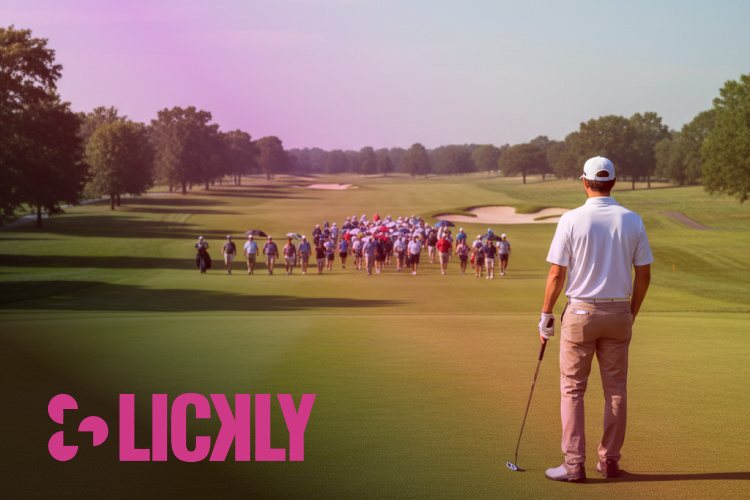
Why smaller teams are actually better positioned to win around live moments — if they know where to look first. Part 1 of 2.
At live moments, you can tell which teams did the work early and which didn’t.
Between lean teams and big brands, the spend gap is very real, but it's not the deciding factor. What actually determines whether a brand shows up with credibility or without it is the order of decisions. Audience before creator, signal before spend, community before content.
Big brands get that sequence wrong all the time, and their budget covers the gap. Lean teams can't afford that buffer, which means getting the sequence right is the whole game.
A Quick Disclosure
RAD Intel is thrilled to be a sponsor at this year's PGA Championship. We'll be there hosting clients, investors, and the RAD team.
We're aware that's a large moment for a company that typically advises lean teams to stop chasing large moments. We chose it deliberately, and we'll get to why. This playbook works for any lean team, at any scale, around any moment that matters to their audience.
Why We Usually Say: Skip The Peak
The standard advice we give smaller teams is to stop competing for attention at the top of the moment and start owning the ground underneath it.
Every major cultural event has a long tail of smaller moments building toward it. For something like the PGA, that looks like equipment drops in the weeks before, swing-coach content picking up traction, handicap communities getting active, course previews circulating among people who will never attend but follow obsessively. Those moments don’t trend. They don’t get the same reach numbers. They’re where trust actually gets built, and that trust is what makes a brand feel like it belongs.
A lean team that owns three of those micro-moments before the event peaks will land with more credibility during it than a bigger competitor who showed up only when the cameras did.
That's the usual playbook. So why did we go big?
Why We Made An Exception and What It Required
The PGA made sense for us for reasons that had less to do with playbook and more to do with moment. There's a version of credibility that only comes from being present in rooms that matter to the people you're trying to reach. Investors, clients, the broader industry. Sometimes the right move is to show up at the big moment because it signals you're serious.
Choosing to be there raised the stakes on how we showed up. Sponsoring a moment like this without doing the underlying work would have been exactly the mistake this piece is arguing against. Who's actually in the golf community versus who shows up when the cameras do. What kind of presence fits and what kind lands wrong. The work of understanding that doesn't change just because the decision to attend was made for other reasons.
And that's true for any lean team making a similar call. Showing up at a high-activation moment without that preparation is exactly how brands end up visible in the wrong way. Present but not positioned, noticed but not trusted.
Here's the sequence that makes the difference, whether you're attending something like the PGA or building around a much smaller moment in your category.
The Sequence Lean Teams Can Actually Run
Six to eight weeks before a major moment in your category, stop looking at the event and start looking at the communities around it. Focus on the people who’ve been talking about the underlying topic all year. Those are the people who will be most activated when the moment arrives, and most sensitive to whether a brand feels native or foreign.
From there, the questions get specific. Which of those communities are growing right now versus plateauing? Which creators are genuinely embedded in them — posting, responding, being cited by other members — versus which ones have the right follower count but operate at the surface? What content is actually driving behavior in those communities, and does what you're selling connect to any of it honestly?
Answer those questions and you have an audience map. From that map, creator selection becomes obvious rather than speculative. You’re choosing people who are already trusted by the exact audience you’re trying to reach.
Then you find the micro-moments. The product release adjacent to your category. The community debate you can add something real to. The creator conversation that's building before the main event gets loud. You show up there first, with something useful, before the big moment concentrates everyone's attention and raises the cost of getting it wrong.
By the time the peak arrives, you’re already part of the community.
This Is Where Lickly Comes In
Running this sequence manually is possible. It's also slow, fragmented, and heavily dependent on whoever on your team happens to know the community well enough to ask the right questions. Lickly is built to do it systematically.
It starts with behavioral, cultural, and interest-based signals to map which communities are forming around a topic. Who's talking about it, how they're talking, what they trust, and where attention is actually building versus where it just looks like it is. From that map, it surfaces the creators who are genuinely embedded in those communities. The ones the audience actually listens to.
For a lean team, that means the six-to-eight week sequence we described doesn't require a research analyst, three agency calls, and a spreadsheet that's already outdated by the time it's finished. It means walking into a moment like the PGA, or any moment that matters to your audience, having already identified where you belong, who can credibly bring you there, and whether the fit is real before a dollar moves.
You’re working from a clear map instead of stitching things together. That's the difference between reacting to a moment and being positioned inside it before it peaks.
Why Lean Teams Are Actually Better At This
Here's the part that doesn't get said enough: this sequence is harder for large brands to run, not easier.
Enterprise teams have more data, more budget, and more creator relationships. They also have more approval layers, longer briefing cycles, and less ability to act quickly on what they find. By the time a large brand has aligned internally on an audience insight, a lean team has already contracted a creator and started building.
The advantage comes from moving earlier. And lean teams, almost by definition, can move earlier if they start looking before most brands think to.
The community has already decided who belongs by the time the moment peaks. The window to influence that decision is in the weeks before, in the micro-moments most brands walk past without noticing.