Why Creator Selection Is a Performance Decision

If you’re running influencer marketing on a small team, you don’t have room for guesswork.
There isn’t a separate strategy department reviewing your shortlist. There isn’t a performance pod modeling five scenarios either. It’s just you — a budget, a deadline, about 55 tabs open, and a dream to hit the campaign out of the park.
That’s why the inputs behind creator selection matter more than the selection itself. Because the inputs behind your selection determine whether you spend the next two weeks optimizing performance — or fixing content that never quite fits.
Small Teams Feel Selection Mistakes Immediately
On larger teams, inefficiency gets absorbed. Budgets are bigger, timelines can stretch, learning cycles have some extra cushion.
But on lean teams, every decision shows up fast.
If you pick the wrong creator, you feel it in the recap. You feel it in the budget pacing. You feel it when you have to explain why projected conversions didn’t materialize. There isn’t excess capacity to “just test more.”
The inputs behind creator selection become the highest-leverage point in the workflow. There’s nothing glamorous about it, and the cost of getting it wrong is real.
Surface Metrics Create False Confidence
Engagement rate looks reassuring. Audience overlap looks close enough. The content feels aligned at first glance. That’s usually enough to move forward, right?
But surface metrics can’t show how an audience reacts when a product actually appears — whether recommendations convert or whether branded posts get skimmed past.
For small teams, that gap is costly. And you don’t need more creators in your database, you just need fewer unknowns before you commit.
Fit Saves Time, Not Just Performance
Strong creator-brand fit improves performance and makes execution smoother from start to finish.
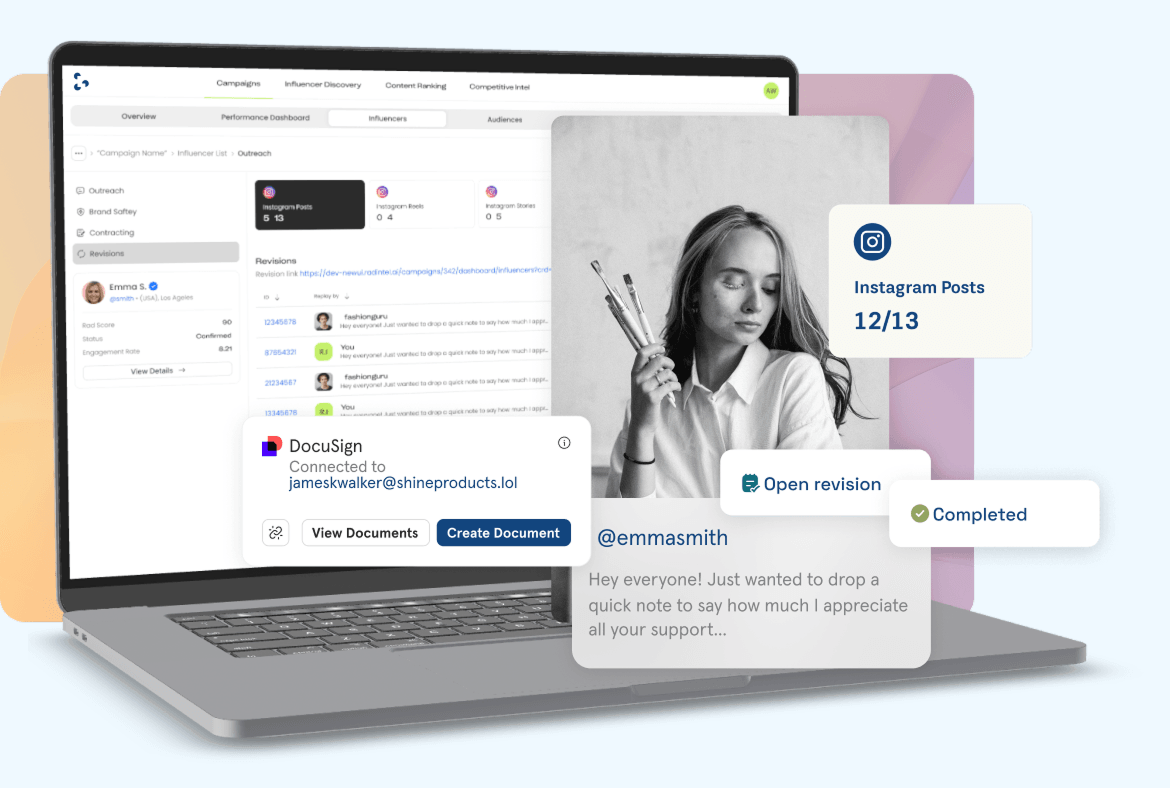
When alignment is strong, briefing is easier. Messaging feels natural. Revisions decrease. Approval cycles shorten. You spend less time negotiating edits and more time optimizing what matters.
When alignment is weak, everything takes longer. You rewrite captions. You push back on framing. You adjust expectations mid-flight. You troubleshoot performance instead of scaling it.
Small teams don’t have spare hours for that. Fit protects time. And we know time is leverage.
Performance Is a Workflow Issue
When influencer marketing feels inconsistent, it’s rarely because creators are unpredictable. It’s because selection happens without enough context.
If you don’t know how a creator’s audience responds to similar categories, you’re making a forward bet without signal. You’re hoping alignment exists instead of validating it.
That slows learning cycles. It stretches optimization windows. It forces reactive decisions after budget is already committed.
For a team juggling paid, organic, reporting, and partnerships, that drag compounds quickly. Audience understanding shapes creator selection, which drives performance and how smoothly the campaign runs.
Behavior Tells You More Than Demographics
It’s what makes creator selection predictable instead of reactive. While demographics describe who follows a creator, behavior explains how they act.
Two creators can have similar audience breakdowns and wildly different response patterns. One drives comments that signal intent. The other drives passive engagement. One converts quietly. The other creates noise.
Without behavioral context, those differences stay hidden until after launch. That’s the wrong time to discover them. Performance improves when selection is grounded in how audiences actually respond — not just who they are on paper.
For lean teams, that shift reduces guesswork without adding complexity.
Better Inputs Tighten Everything Downstream
When creator decisions are informed by audience behavior, the workflow tightens.
Shortlists get smarter faster. Briefs are clearer from the start. Expectations are realistic before contracts are signed. Fewer surprises show up in reporting.
Performance still varies. Hey, that's marketing. But the swings become explainable. And explainable performance is easier to manage than unpredictable spikes and dips.
Small teams run on clear inputs, not perfect ones.
Built for Operators, Not Committees
Lickly isn’t built for governance committees or enterprise oversight. It’s built for operators who need answers quickly.
Audience insights surface before you finalize a shortlist. Micro-communities are mapped so you understand context, not just demographics. Behavioral signals help you evaluate whether a creator’s influence actually translates into action.
That shifts creator selection from instinct to a downstream decision. Lean teams need confidence built into the process, not added complexity.
When you don’t have margin for unnecessary cycles, creator selection becomes the output of better inputs. You feel the impact the moment results come in. And when decisions get sharper, everything downstream gets easier to run.