Influencer Outreach: The Complete Guide to Getting Replies
Influencer outreach is where most creator programs quietly stall. You can build the perfect shortlist, vet every profile, and line up creators whose audience fits your brand, but none of it matters if they never reply.
Outreach looks simple from the outside, but up close it is slow and easy to get wrong. Reach out to the wrong person, say the wrong thing, or send forty messages with no system behind them, and you can burn weeks with nothing to show for it.
This guide covers the whole influencer outreach workflow, from picking who to contact to writing messages that get answered, following up, and closing the deal, plus how to automate the repetitive parts and track it all. One idea runs through everything in this guide: who you reach out to matters just as much as what you say.
Key Takeaways
Influencer outreach starts with audience fit. Identify creators whose followers match your target audience before evaluating follower count or engagement.
Personalization improves influencer outreach. Reference the creator’s actual content and clearly explain why the partnership is relevant to them and their audience.
Choose the outreach channel based on the creator. DMs often work well for smaller creators, while email is better for formal partnerships and larger influencers.
Follow up without overwhelming creators. Send 1–3 thoughtful follow-ups, spaced several days apart, and add new context instead of repeating the same message.
Track outreach as a measurable process. Monitor reply rate, positive reply rate, cost per collaboration, and time to yes to improve future campaigns.
What is influencer outreach?
Influencer outreach is the process of contacting social media creators to propose a collaboration, such as gifting, a paid post, an affiliate deal, or a longer-term ambassadorship. It is the step that turns a vetted shortlist into live partnerships. The best outreach starts before you write a single message. First you decide which creators are worth contacting, and that choice shapes everything that follows.
How to do influencer outreach, step by step
Good outreach works like a system. It is who you contact, how you find them, the channel you pick, the message you write, and how you follow up. A weak link anywhere costs you the reply. The nine steps below run in the order you would actually do the work. The first is the one most teams skip.
1. Start with your audience, not the creator
Almost everyone starts by looking for creators. Bigger following, nice content, right niche, add them to the list. The problem is that follower count only tells you how many people a creator reaches. It says nothing about whether those people are your buyers.
So flip the order. Before you shortlist anyone, get specific about who you are trying to influence: what they buy, what communities they trust, what problems your product solves. Then look for creators whose engaged audience actually overlaps that group.
The fastest way to improve reply rates isn't sending more emails—it's contacting creators whose audiences already align with your buyers.
Two creators can show the same follower count and engagement rate and still deliver completely different results. One reaches people who buy what you sell. The other reaches a crowd that likes the post and moves on. That gap is audience overlap, and it is invisible in the standard stats, so you only catch it if you look before you commit.
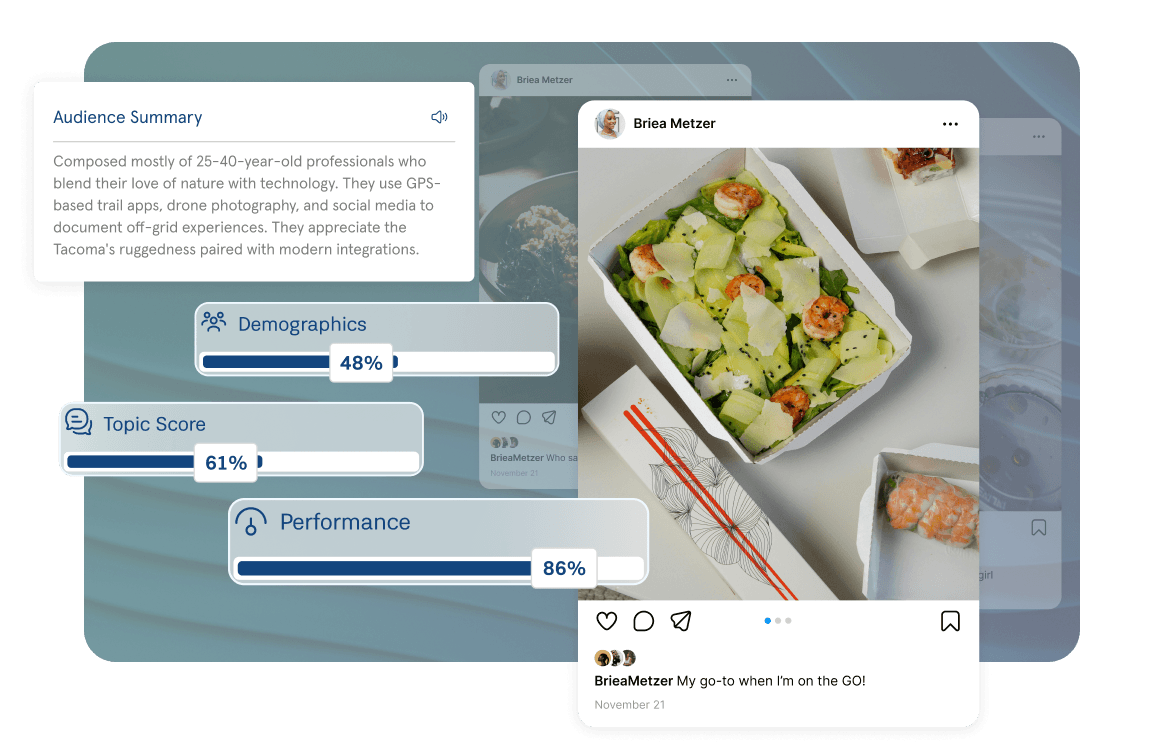
Reading a creator's audience by hand is slow, which is why lean teams skip it. This is exactly the kind of insight Lickly is built to surface. It reads the communities around a creator and shows you where real influence is forming, so your shortlist starts with the people who move an audience.

2. Find and vet the right creators
Once you know the audience, go find the creators who reach it, then check they are worth your time. Discovery gets you a list. Vetting decides who stays on it.
You can build that list by hand: search hashtags and keywords, look at who your competitors work with, or mine the followers and tagged posts of creators you like. It works, but it is slow and surfaces the creators who are easy to find rather than the ones who are the best fit. Lickly's influencer discovery filters on the audience behind each creator, so your list is already pointed at the audience you defined.

The main types of influencers (and how tier changes your outreach)
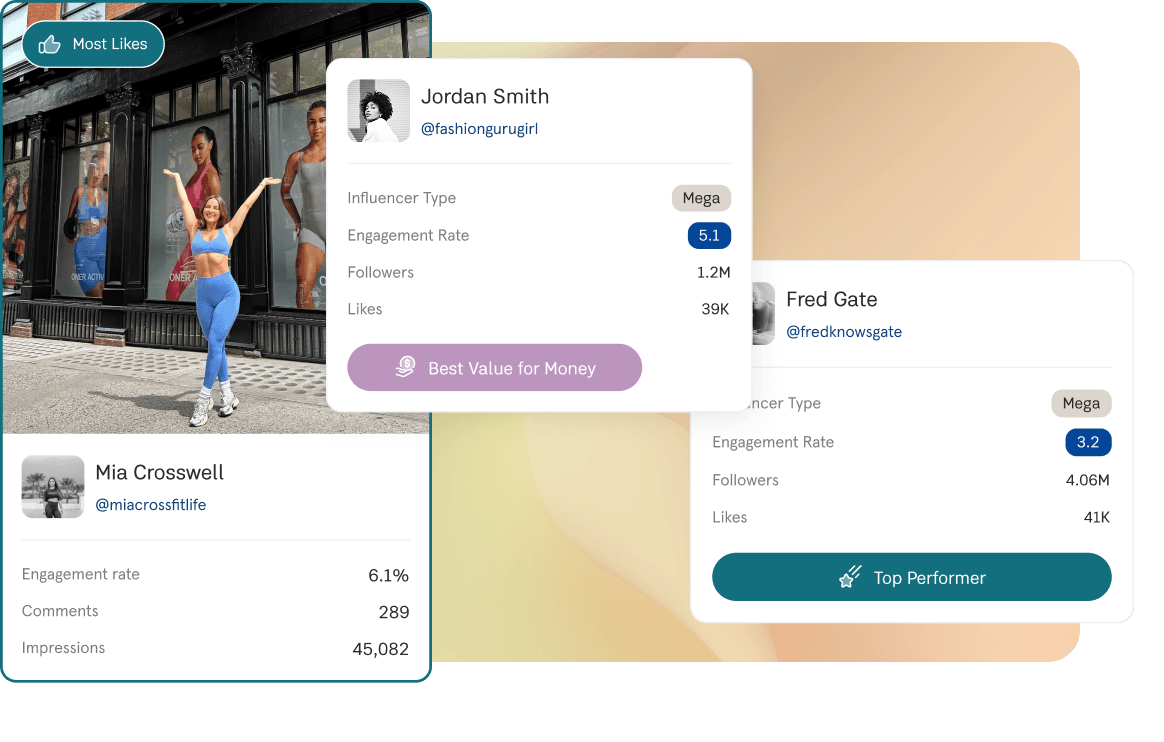
Tier changes almost everything about how you reach out. Creators are usually grouped by follower count.
Nano (1K to 10K): small, highly focused audiences and often approachable through direct outreach.
Micro (10K to 100K): a popular tier for brands looking for targeted reach while keeping creators relatively accessible.
Mid-tier (100K to 500K): more reach, more professional, more likely to expect a paid brief.
Macro (500K to 1M): broad reach, with managers or agents more likely to be involved and paid partnerships more common.
Mega and celebrity (1M+): mass reach, with professional representation and more formal partnership processes often involved.
The instinct is to chase the biggest creator you can afford. Resist it. Smaller creators can be more responsive to brand outreach, so a well-chosen micro-creator may be a better fit than a macro name, especially for smaller brands. Tier also sets expectations: smaller creators may be easier to reach directly, while larger creators are more likely to have managers or agents involved.
How to vet a creator before you reach out
Vetting answers one question. If this creator says yes, will it work? Check five things.
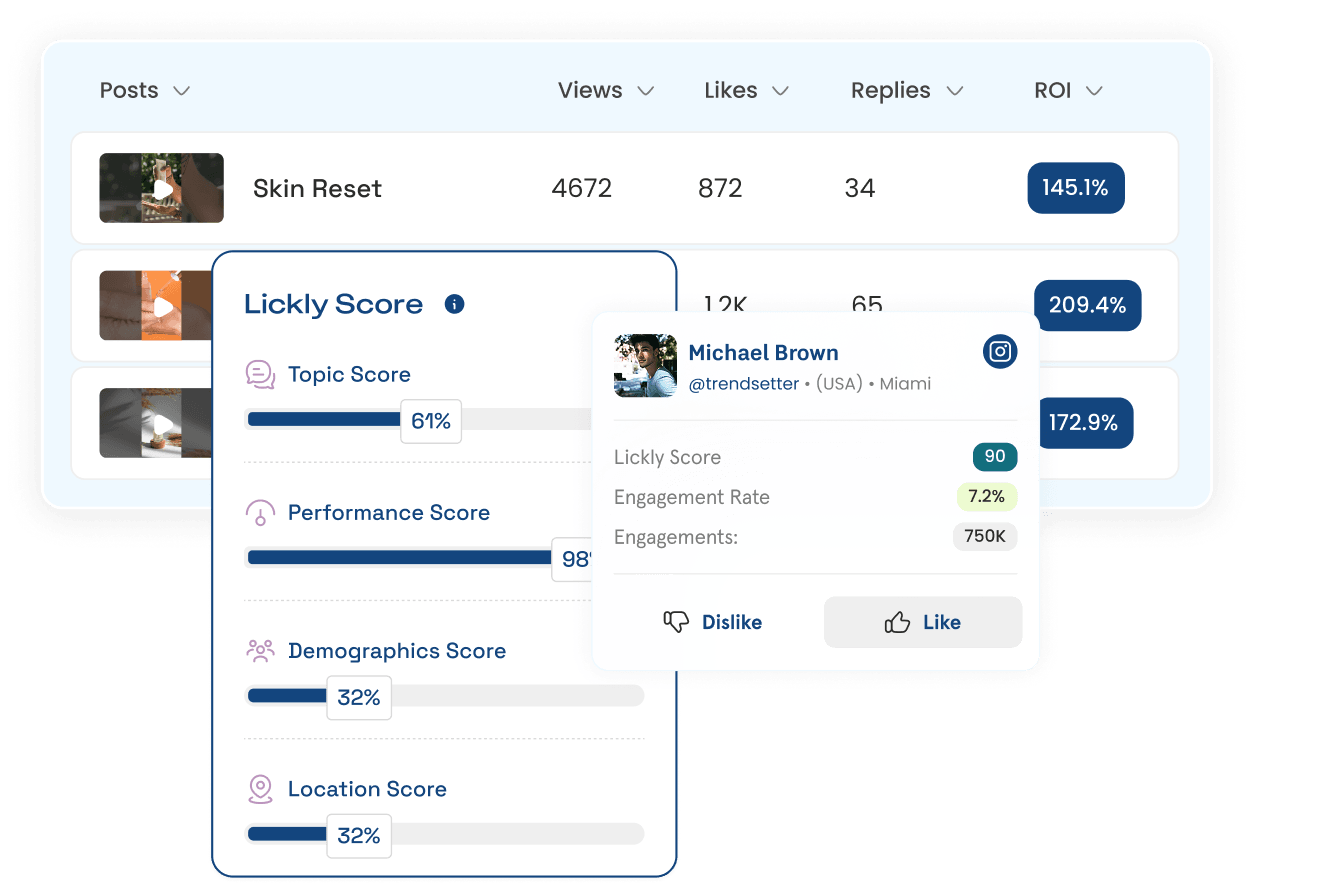
Audience overlap: Do their followers match the people you set out to reach? This matters most and gets skipped most, because checking it by hand means digging through follower lists and comments. Lickly scores every creator against your audience, so instead of guessing you get a number for how well they match.
Engagement quality: Look past followers at comments and saves. A large follower count does not necessarily mean a creator is the better fit. Compare engagement quality and audience relevance alongside reach.
Authenticity: Sudden follower spikes or unusual engagement patterns can be signals worth investigating when assessing audience authenticity.
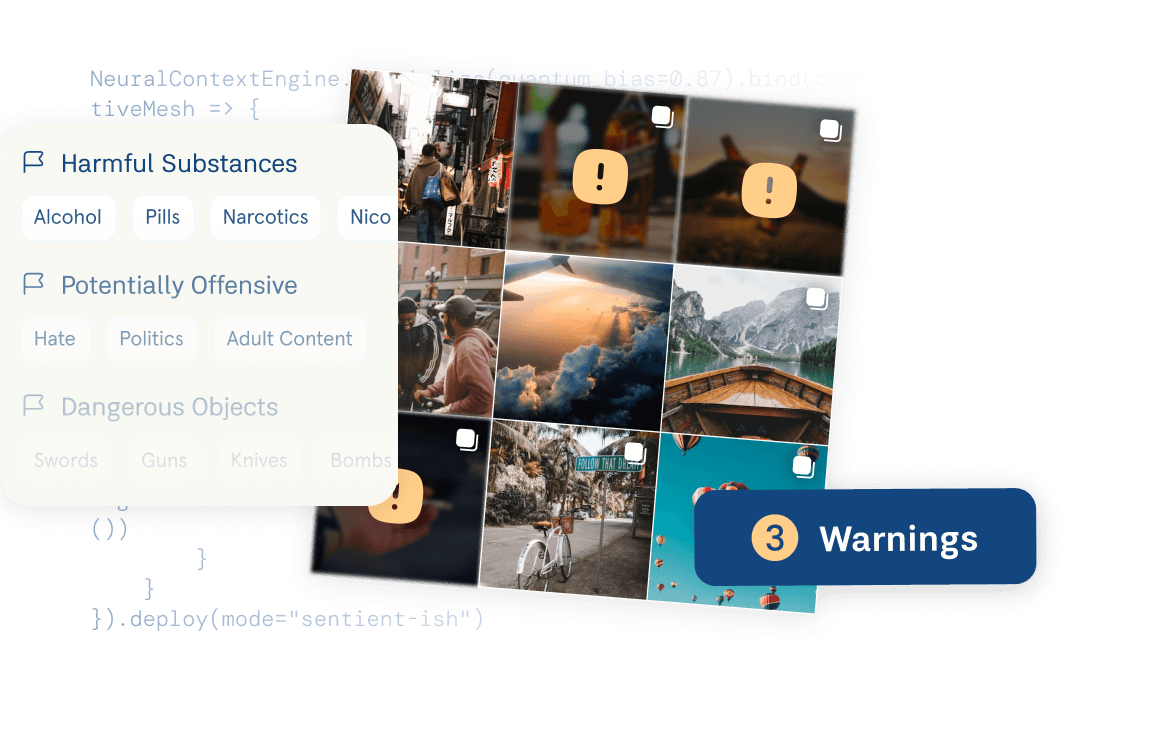
Brand fit and safety: Does their recent content align with your brand, and is there anything you would not want your name next to? Lickly runs an automatic brand safety check on every creator.
Past partnerships: Have they worked with brands like yours, and did it look genuine? Their existing affiliations also show who your competitors are already working with.

3. Warm up before you reach out
A little familiarity can make cold outreach feel more personal. If the first time a creator sees your name is your pitch, you are a stranger asking for something. Follow them and engage with a couple of recent posts first: a specific comment that shows you watched, a genuine reply to a story. The goal is simple recognition, so your name is not landing completely cold.
One caution: do not fake it. A string of fire emojis on five posts in ten minutes does more harm than no warm-up at all. One real interaction beats ten hollow ones, and it costs a few minutes per creator, another reason to keep your shortlist tight. You cannot warm up five hundred people. You can warm up twenty.
4. Choose your channel (email or DM)
Email is best for anything formal or detailed: a full brief, deliverables, rates, a contract, a paper trail. It is the default for mid-tier and larger creators and anyone with a manager. Many creators keep a business email just for brand deals and treat it as the channel for serious inquiries. The downside is that inboxes are crowded and a cold email can sit for days.
A DM is best for a warm, quick first touch with nano and micro creators who run their own accounts. It feels personal and moves fast, but it is poor for anything long and gets buried quickly. Rule of thumb: the bigger the creator and the ask, the more you lean email; the smaller and warmer the relationship, the more a DM makes sense. When unsure, a short DM asking for the best email gets you both.
5. Find their email or contact
If you are going the email route, you have to find the email first, and this quietly eats time. Here is where to look on each platform.
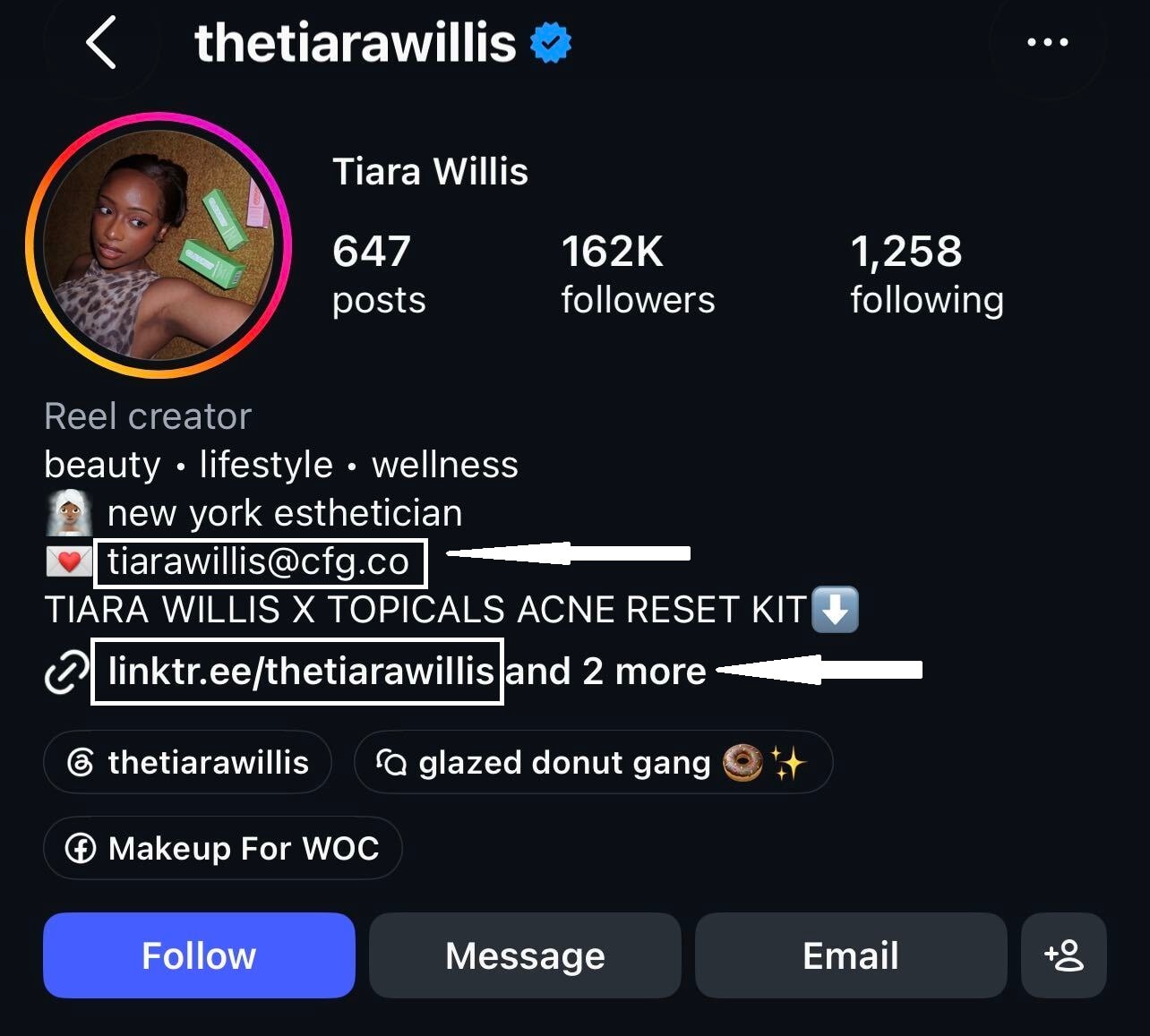
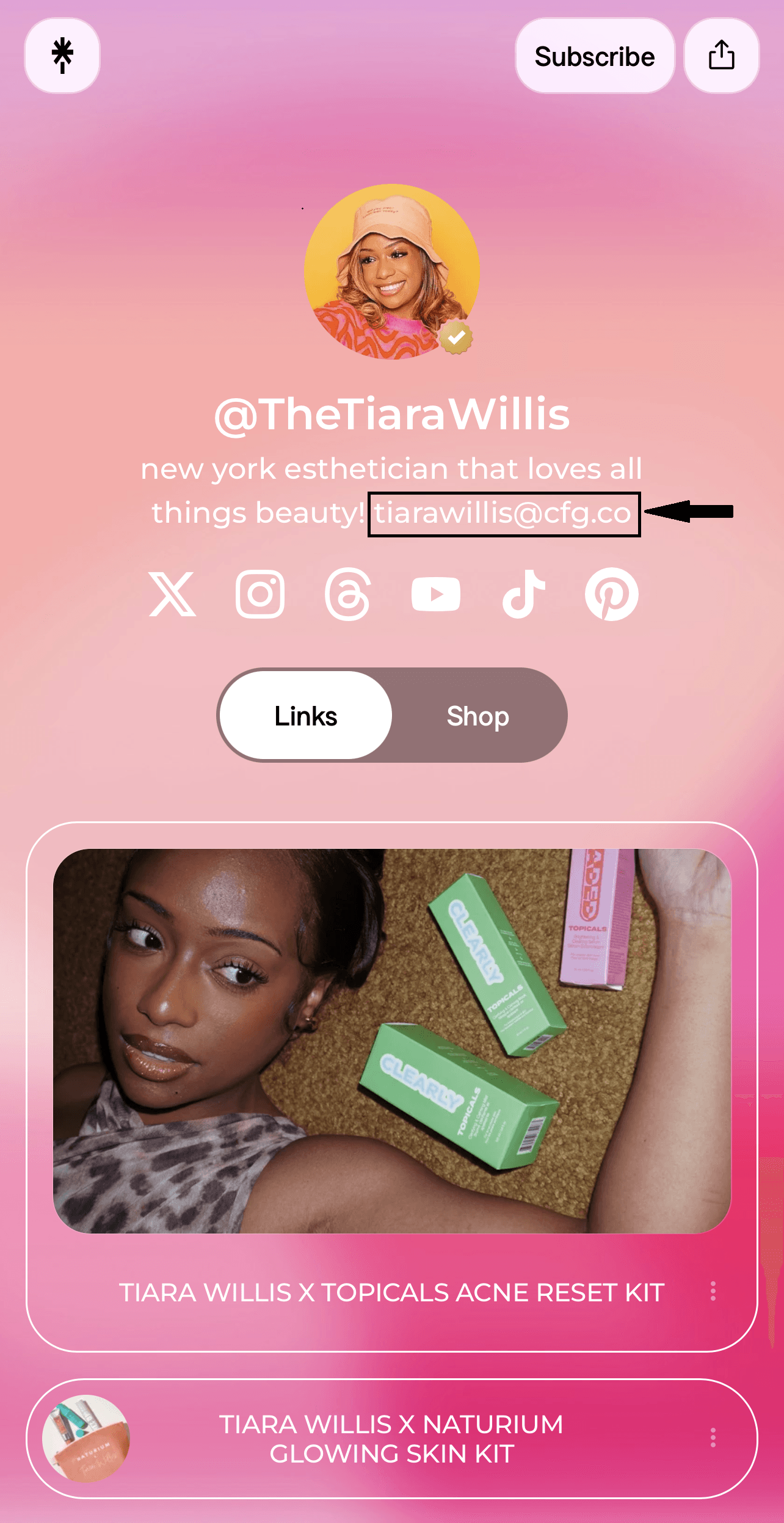
Instagram: many creators put a business email right in their bio, so check there first. If it is not visible, a professional account usually has an Email or Contact button under the bio. Still nothing? Open the link in their bio, where a Linktree or Beacons page often hides a "work with me" tab or a business email.
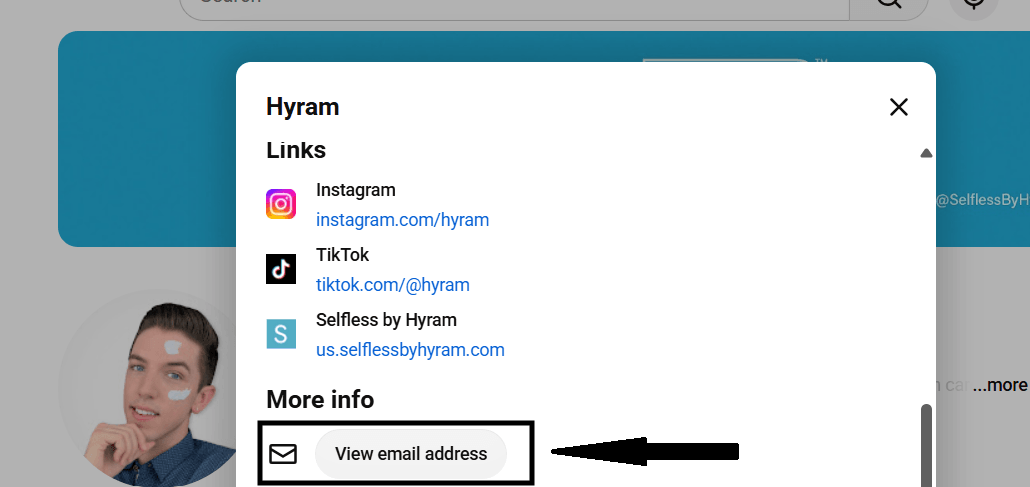
YouTube: open the channel's About tab, where many creators list a business-inquiries email, sometimes behind a quick "I'm not a robot" check. If it is not there, check the description of a recent video.
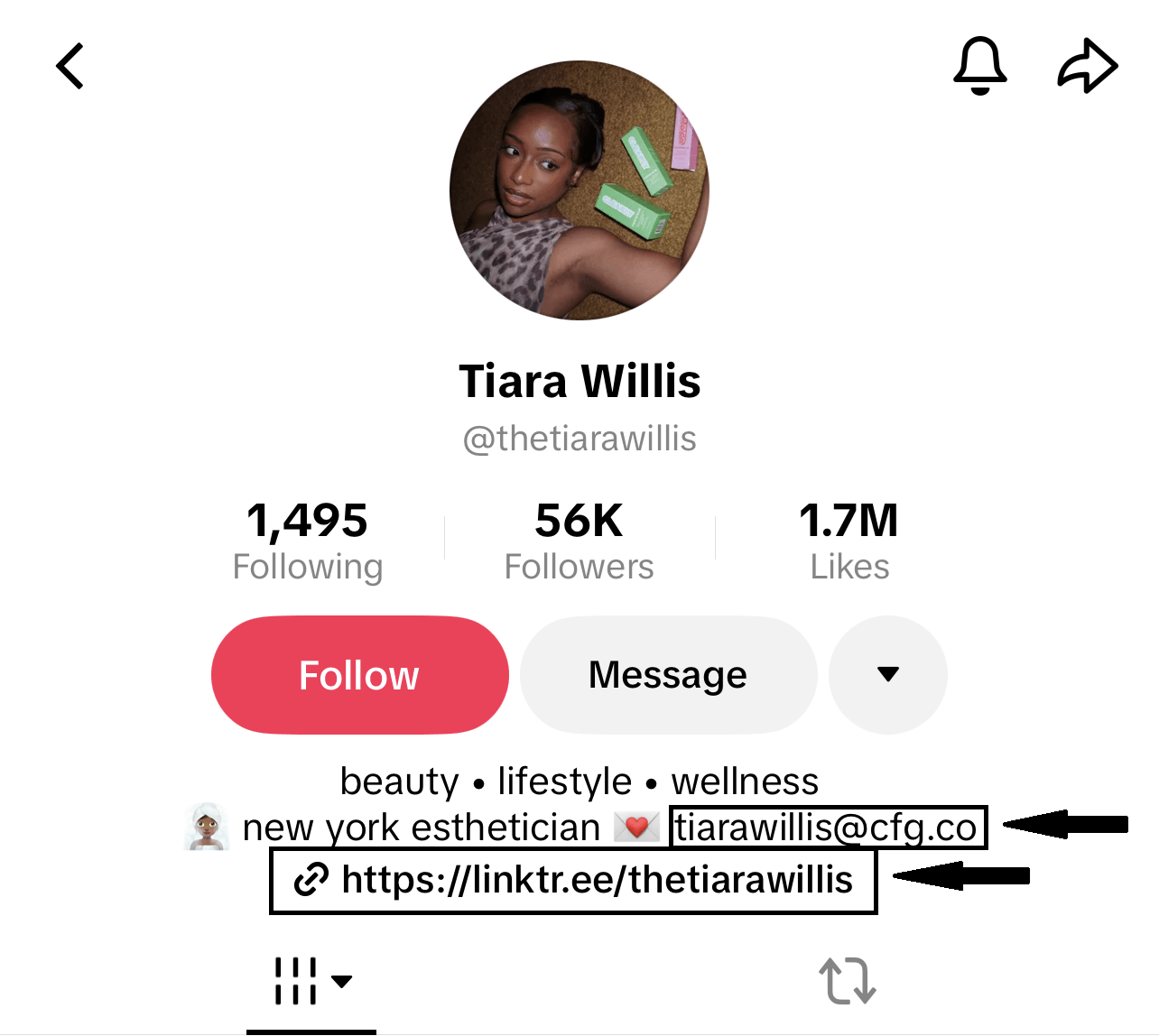
TikTok: check the bio first for a business email, or a link out to a Linktree or Beacons page where their contact details often live. At any real volume, the TikTok Creator Marketplace gives you verified contact details and rates directly.
Everywhere else: run a quick Google search for the creator's name plus "media kit" or "contact." Established creators often have a personal site with a clean business email or a booking form.
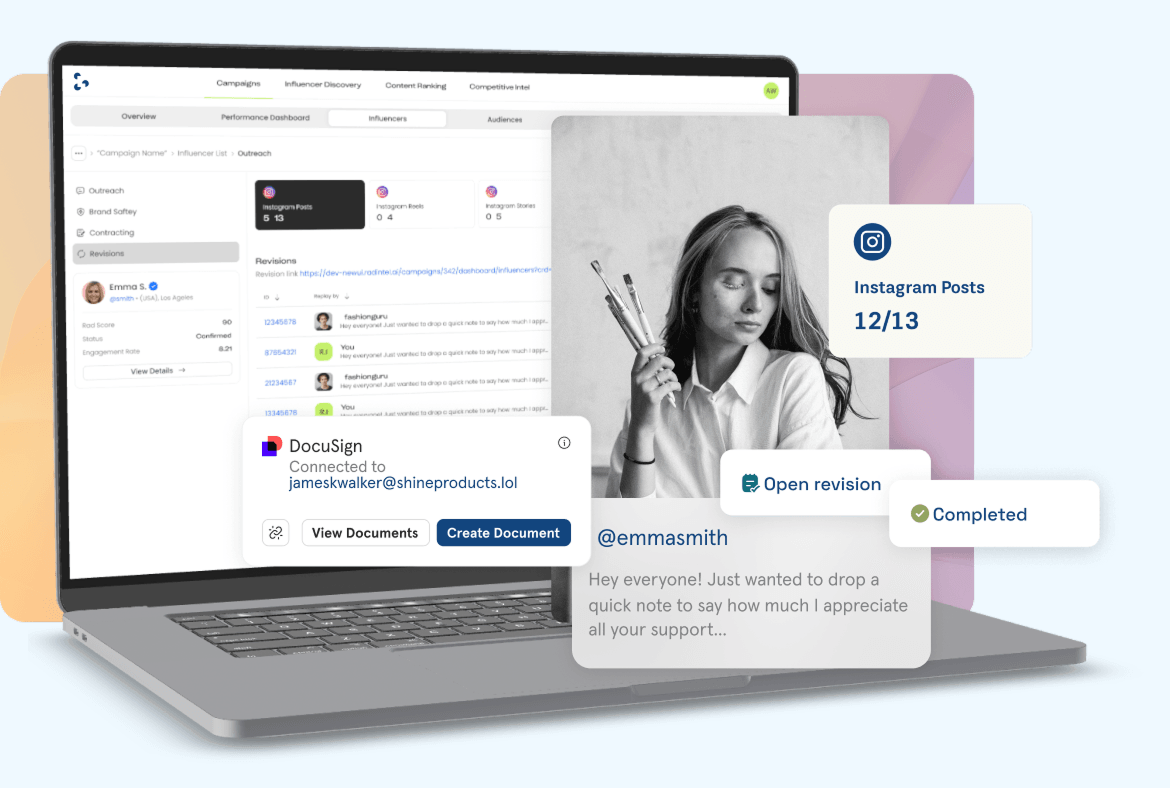
All that hunting is the kind of manual work a platform erases. In Lickly, you add your chosen creators to a campaign and their contact details come with them, so there is no digging through profiles to build your list. From there you reach out and keep the whole conversation in one place.

6. Write a personalized outreach message
If you did the earlier steps this gets easier, because you are writing to someone who fits and you have a real reason to reach out. Keep it short, around 100 to 150 words. Creators skim, so lead with them, make one clear ask, and give them an easy way to say yes.
What to offer
Get clear on what you are offering before you send, because a creator who replies "sounds good, what are the details?" wants a fast answer. Know four things.
Deliverables: What you want made, in specifics. "One Reel and three Stories," not "some content."
Compensation: The common routes are gifting (free product for a post, best for smaller creators and testing), a flat fee (set pay for set deliverables, the clearest option), affiliate or commission (a cut of the sales they drive, good when budget is tight), or a hybrid.
Budget ceiling: Even if you do not share it, know the most you will pay before you start.
ROI expectation: What this needs to return to be worth repeating, whether that is sales, sign-ups, or content you can reuse.
A quick rule: gift when testing or working with smaller creators, pay a flat fee when you know exactly what you want, go affiliate when budget is tight, and use a hybrid to share the risk. Stay open if a creator pitches a better format, but know your ceiling so you can say yes quickly and mean it.
The five parts of a message that gets a reply
Almost every strong message has the same five pieces.
A personalized opener that proves you know their work. Reference a specific recent post, not "I love your content."
Who you are, in one line, with a quick reason to take you seriously.
The ask, with real deliverables. "Two Reels and three Stories over four weeks" beats "a collaboration."
The value. What they get, and if you are paying, say so early.
One clear next step, like "Want me to send the full brief?"
The same five parts work in a DM, just tighter. Drop the subject line, shorten everything, and get to the ask faster.
Subject lines that actually get opened
The subject line decides whether any of this gets read. Be specific, sound like a human, and reference them. A few that work, by scenario:
Scenario | Subject line |
Gifting a micro-creator | Loved your [specific post], [name] |
Paid campaign | Paid [platform] collab for [month], [name]? |
Affiliate offer | A commission idea for your [niche] audience |
Talent manager | Paid collab with [creator] for [month] |
Warm follow-up | Following up, [name] |
After they engaged | Thanks for the reply, [name], details inside |
Avoid fake urgency ("Don't miss out") and fake familiarity ("Quick question" from a stranger). The best subject line sounds like something a real person would actually write.
Influencer outreach examples for every scenario
Here is what the five parts look like in a real message, across the situations you will face. Start with a gifting note to a micro-creator.
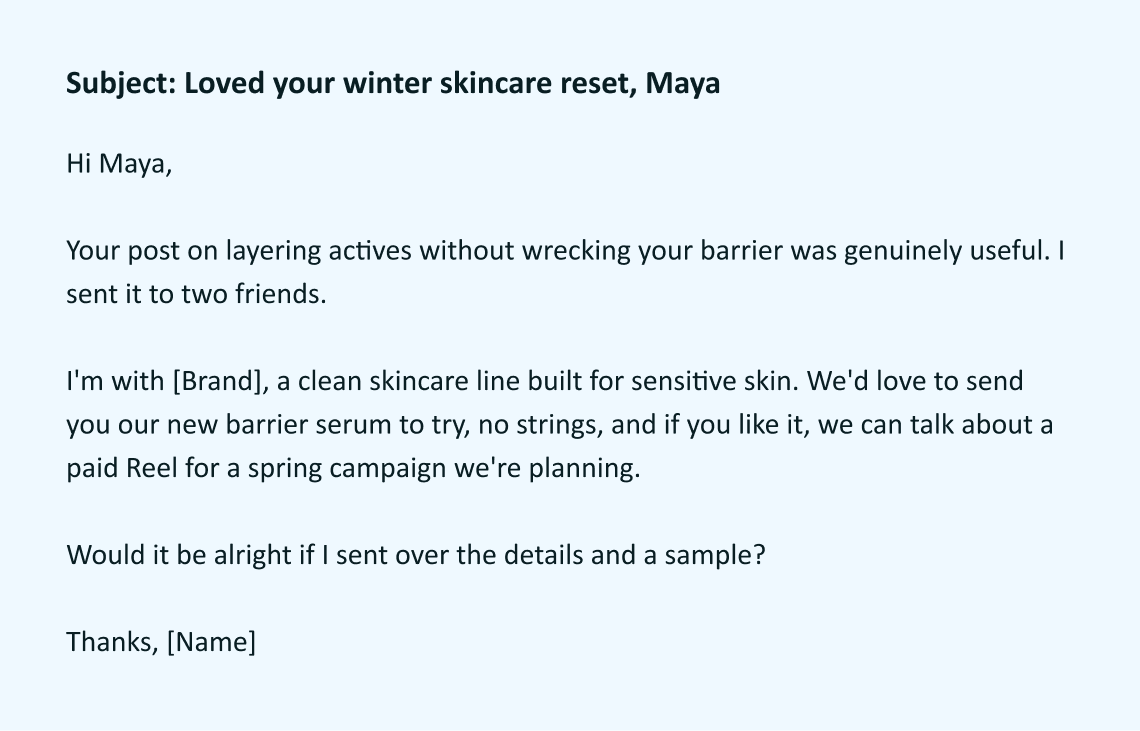
It opens with a specific post, names the brand and fit in one line, leads with a no-pressure gift, then hints at paid work, and ends with one small question. That is the soft-ask version, your default when you are flexible on the partnership.
When you have a specific paid ask, do not bury the deliverables and budget. Stating them upfront lets a busy creator price the job in one reply.
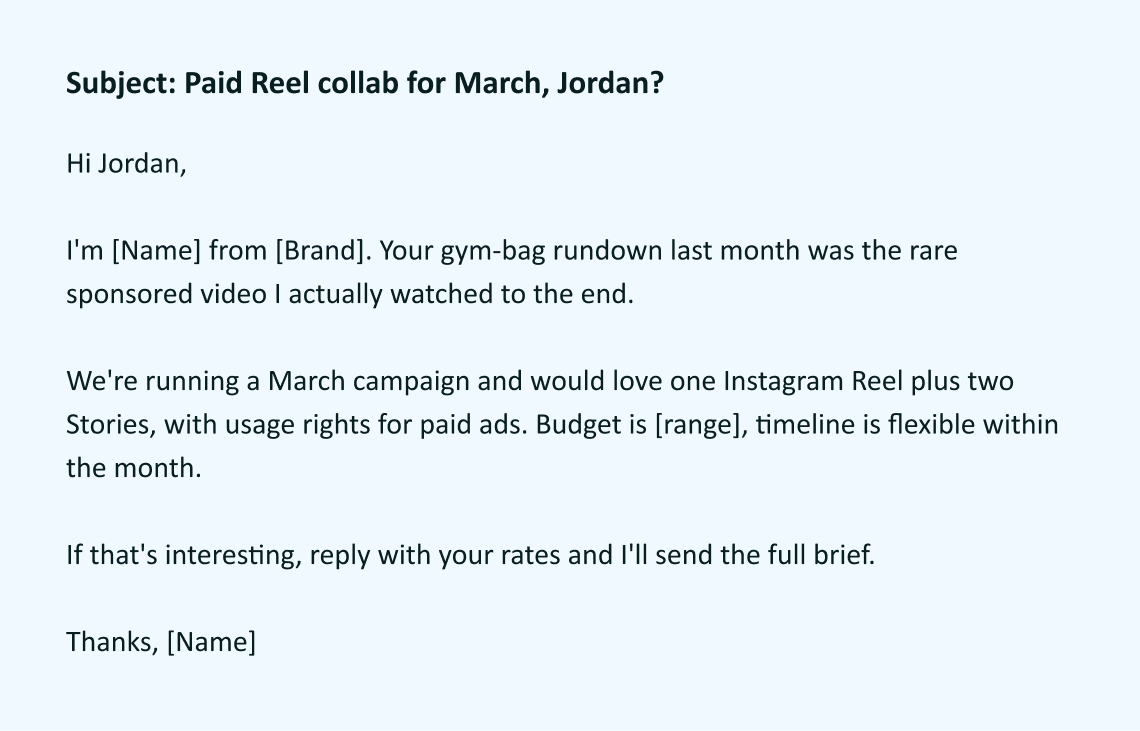
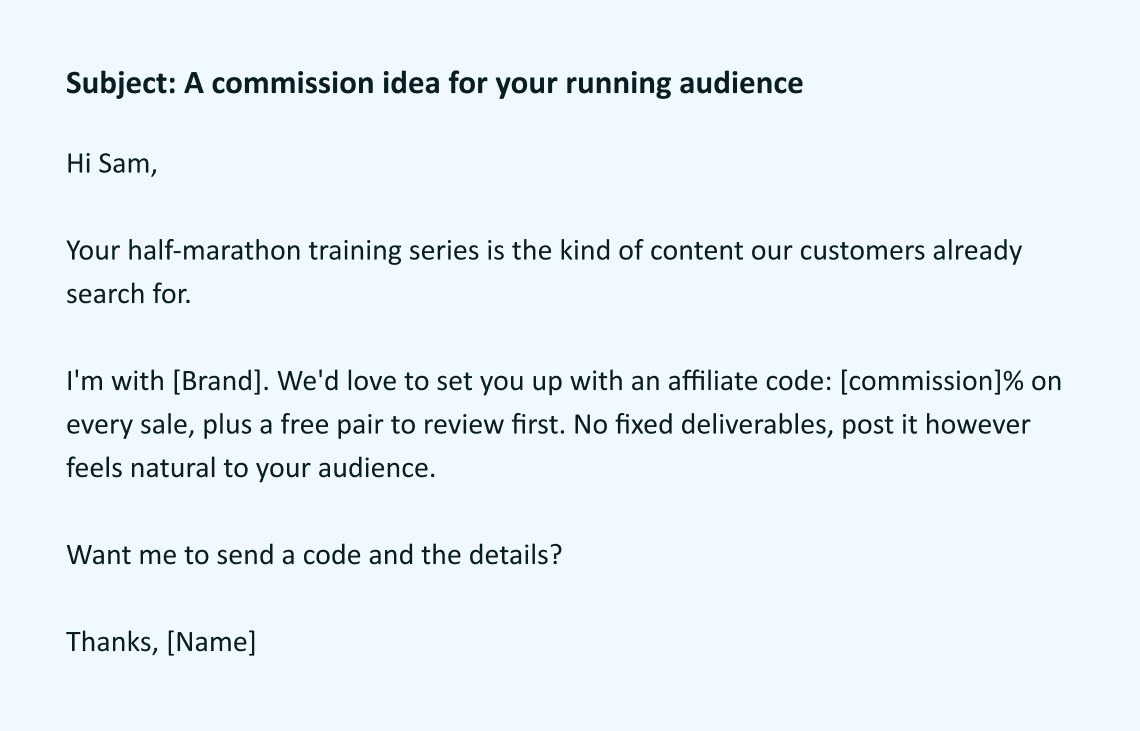
When you are offering affiliate or commission, be honest that it is performance-based, but remove the risk with a free product and hand over control of the content.
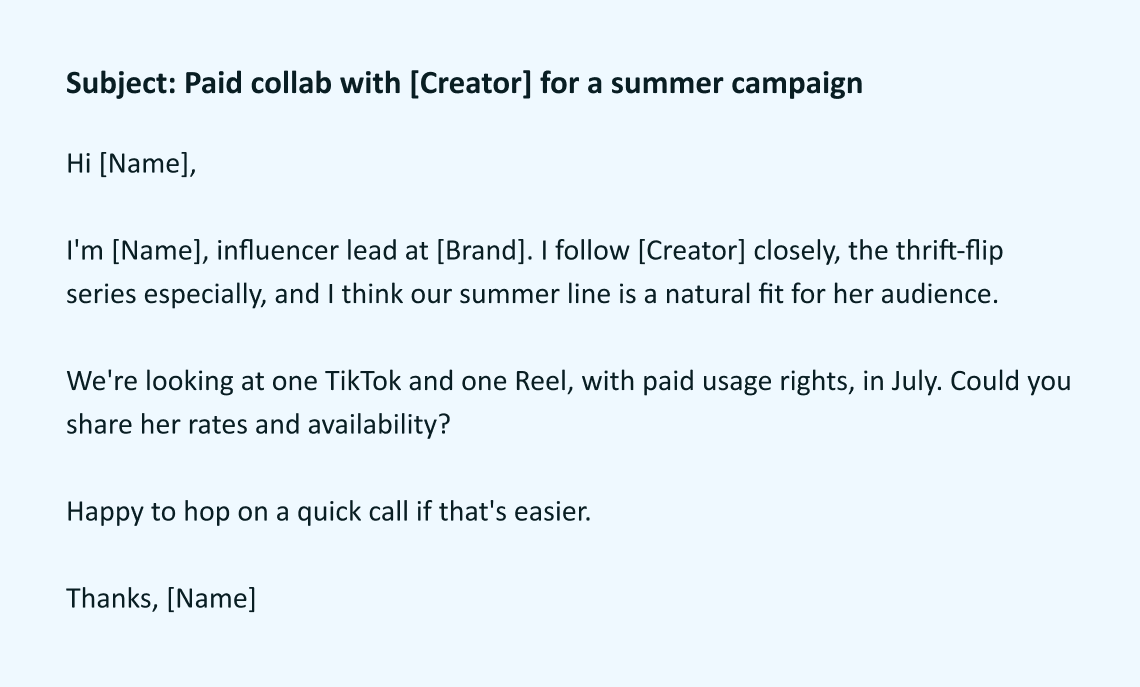
When you are writing to a talent manager, keep it just as personal but aim the commercial question at the person who books the deals.
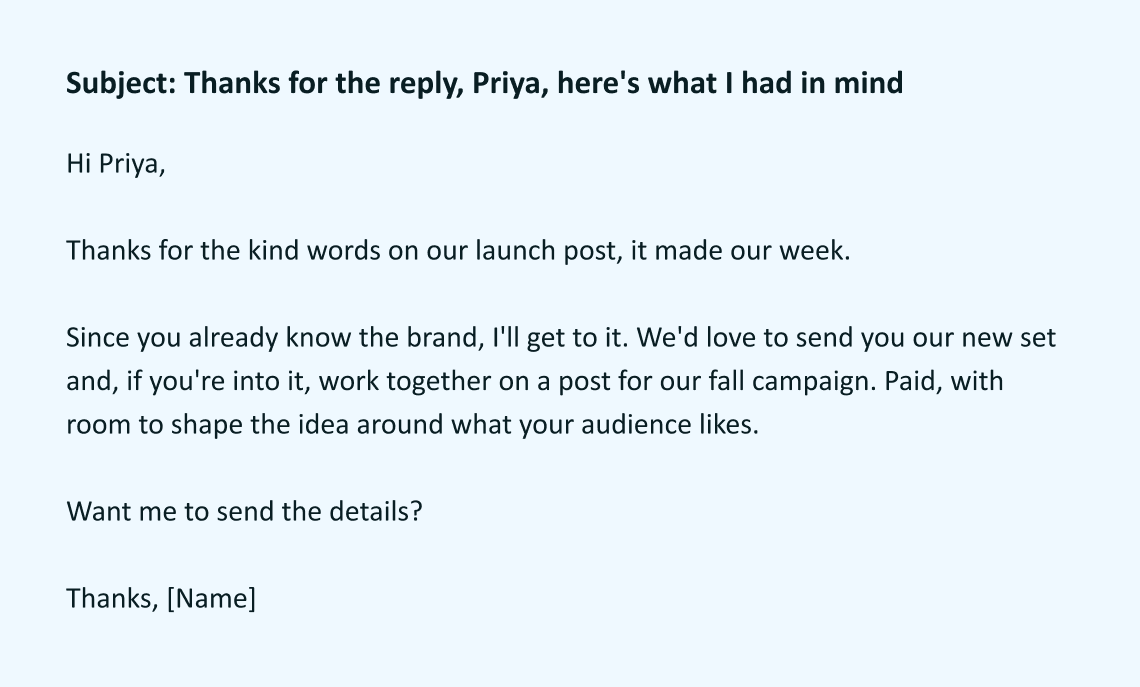
When the creator already engaged with you, do not pretend to be a cold first contact. Use the warmth and move faster.
And when you want a long-term ambassador, name the pattern that made you reach out and offer the stability creators value.
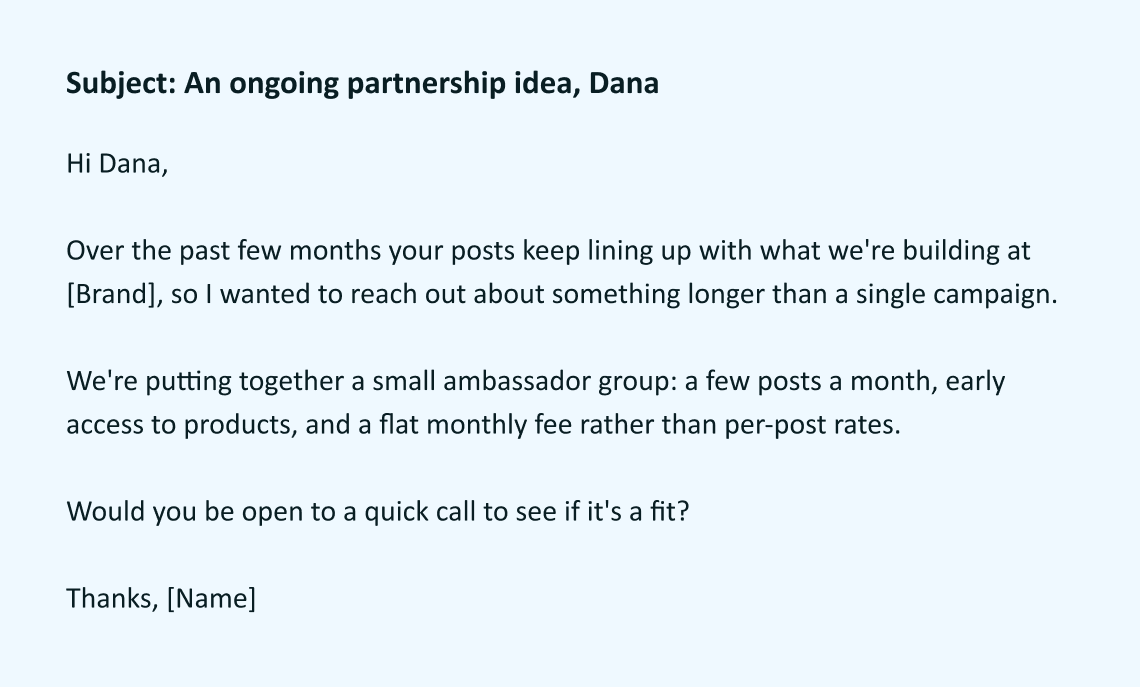
Across all six the pattern holds: specific opener, clear who-you-are, honest ask, real value, easy next step. Match the message to the moment and you’ll sound like a person, not another marketing template.
7. Follow up without being annoying
Not every creator will respond to your first outreach message. Inboxes are chaotic and a pitch someone meant to answer gets buried by lunchtime. A follow-up is not pestering. It is often the thing that gets you the yes.
The rule of thumb is one to three follow-ups, spaced three to seven days apart, then stop. Each one should add something new, a fresh angle or detail, rather than just poke. Repeating "just bumping this" is what actually gets you marked as annoying.
Touch | Timing | What to say |
Follow-up 1 | 3 to 4 days after | Short bump, restate the offer in one line, assume they just missed it |
Follow-up 2 | 5 to 7 days later | Add something new: a sample, a case, an idea for their audience |
Follow-up 3 | 7 days later | The polite close-out, one last easy yes, then let it go |
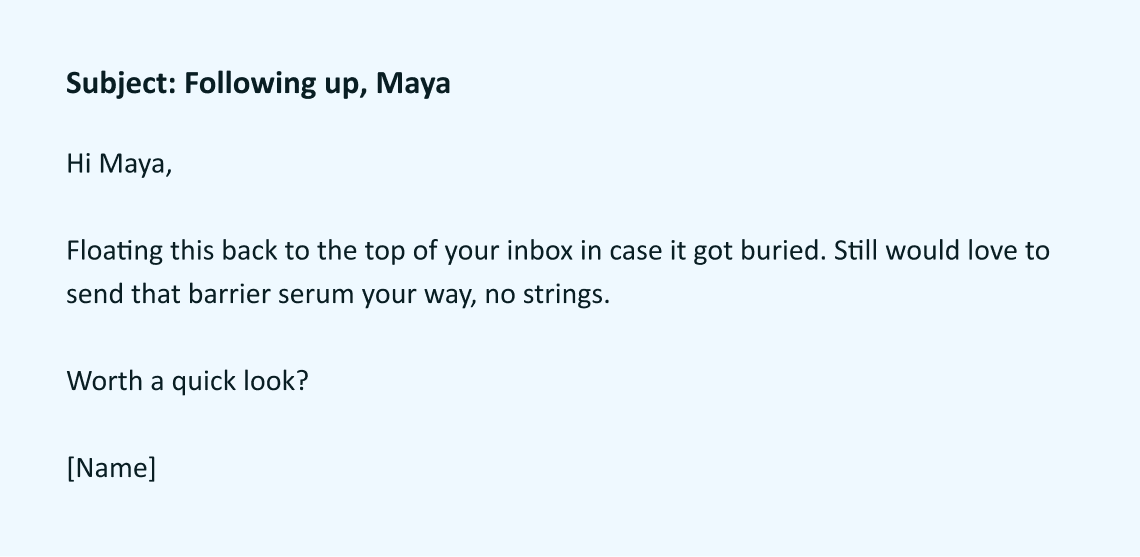
By the last touch, give them an easy out, something like "I'll stop cluttering your inbox after this, and the door stays open." Giving creators an easy way to decline keeps the interaction respectful and avoids unnecessary back-and-forth. And if a creator goes quiet after showing interest, one warm re-engagement a few weeks later is fair game. Timing kills more deals than disinterest does.
Following up by hand across a full list is exactly the kind of thing that slips when you get busy. In Lickly, you can set up automated follow-up sequences that send on a schedule and stop the moment a creator replies, so nobody falls through the cracks and no one gets a bump they already answered.

8. Negotiate and lock the deal
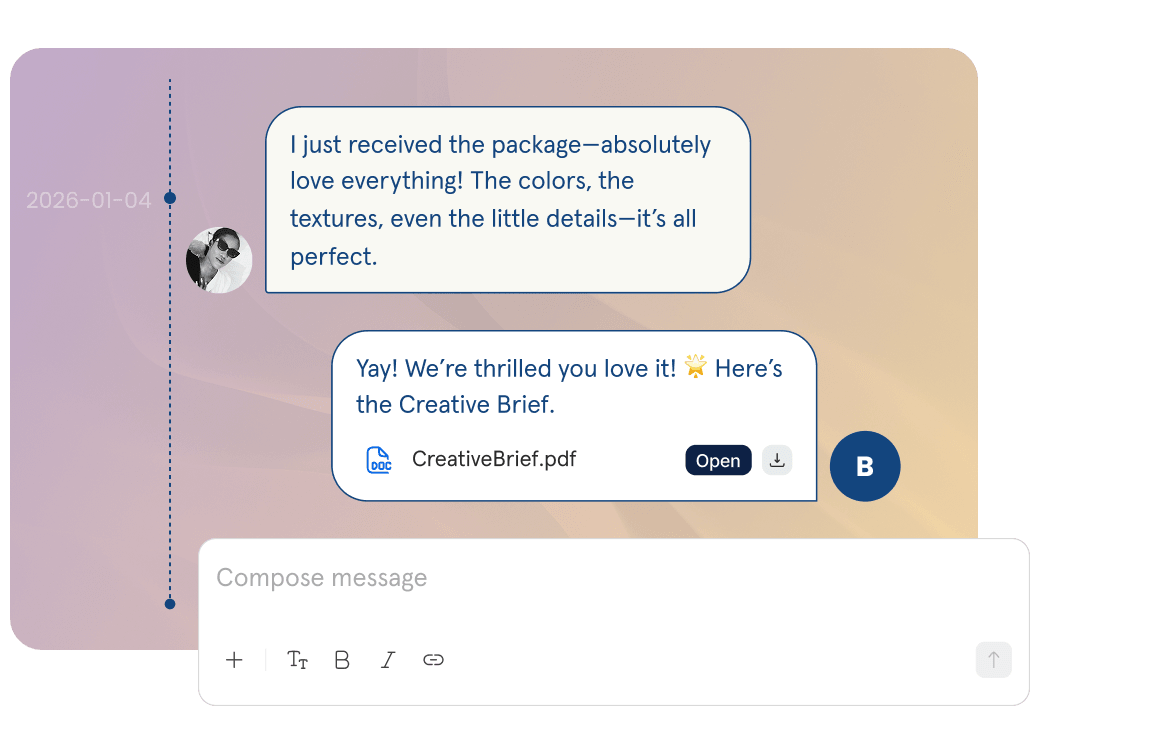
A yes is not a deal, it is the start of one. The gap between "sounds great" and a creator actually posting is where outreach quietly falls apart, usually because nothing got written down. Move the agreed terms into a short brief and a simple contract, with clarity on the things that cause disputes later.
Deliverables and timeline: exactly what, how many, and the post dates.
Usage rights: whether you can reuse the content in ads or on your channels, and for how long. This one gets forgotten constantly.
Exclusivity: whether they can post for a competitor during the campaign.
Payment: amount, method, and when it lands. Late payment is the fastest way to lose a good creator.
FTC disclosure: sponsored content has to be disclosed, so spell out that you expect proper tags like #ad.
Then settle the logistics before they become friction: who they contact with questions, how they submit drafts, and how content gets approved.
9. Track your outreach
If you are contacting more than a handful of creators, a messy inbox will not cut it. Track each creator through the stages: contacted, replied, agreed, live, and then performance once the content is up. The patterns become obvious. If lots reply but few agree, your offer is the problem. If few reply at all, it is your targeting or your message.
This is hard to do in a spreadsheet, because the status changes constantly and lives in your head. In Lickly, every creator you contact moves through those stages inside the campaign, so you can see at a glance who has replied, who is waiting on a follow-up, who has agreed, and who has gone live. Nothing slips, and you always know what the next move is for each person.

Best practices to get higher reply rates
The steps above are the mechanics. These are the habits that separate people who get replies from people who just send a lot of email.
Do not take silence personally. A quiet inbox is normal, and not every creator will respond to your first message. A thoughtful follow-up gives them another chance to see your offer and respond, but if you still hear nothing after a few attempts, move on.
Fix the offer before the wording. If people reply but do not say yes, the problem is rarely your sentence structure. Change the compensation, deliverables, or ask before you rewrite the email again.
Do the unscalable things early. Get on calls, write each opener from scratch, and have a peer tear your messages apart. Manual outreach teaches you quickly what lands, and that is what you bake into templates later.
Start with the audience. A plain message to a well-matched creator beats a polished one sent to the wrong fit. Get the targeting right and reply rates climb on their own.
Reach a real person. A pitch to a generic info@ address competes with everything else in that queue. The creator's own email or their manager gets read.
Keep it short and specific. Around 100 to 150 words, one clear ask, and the value stated early. Long pitches get saved for later, which means never.
Do | Don't |
Reference a specific recent post | Open with "I love your content" |
Reach the person or their manager | Blast a generic info@ inbox |
State the offer and deliverables clearly | Hide the ask under three paragraphs |
Say if it is paid, early | Be vague about money to seem casual |
Follow up 1 to 3 times with a new angle | Send "just bumping this" five times |
Keep it to 100 to 150 words | Paste your brand's founding story |
Let them say no gracefully | Use fake urgency or fake familiarity |
What makes creators actually say yes
Flip the view, because the fastest way to get more yeses is to understand the person deciding. A working creator gets pitched constantly and is running a business. When your message lands, they are quietly asking a few things.
Does this brand fit my audience? Creators protect their audience's trust because it is their entire asset, so a pitch that obviously does not fit gets ignored no matter what you are paying. When a brand genuinely fits, the same creator is far more likely to say yes, because the content works for everyone. This is exactly why we suggest starting with audience fit rather than jumping straight to creators. Get that right first and you spend your outreach time on the creators most likely to say yes, instead of wasting it on pitches that were never going to land.
Is the ask clear and respectful of my time? A vague message that makes them figure out what you want is one they deal with later, which means never. Is the pay fair and the process real? Fair pay, a sane timeline, a proper brief, and a contract all signal that working with you will be easy, and creators can spot an amateur operation fast.
Will this land with my followers? The best creators care whether the content will be good, beyond just getting paid. Give them room to shape the idea and you become a brand they want to work with again. When creators are asked what they look for in a partner, money is rarely the top answer. In one survey of creators, the factors that ranked highest were product relevance to their audience and being treated as a professional, alongside values that align with theirs and open communication.
Measuring outreach ROI
Outreach has its own metrics, separate from campaign performance.
Outreach metric | What it tells you |
Reply rate | Whether your targeting and opener are working |
Positive reply rate | Whether your offer is compelling |
Cost per booked collaboration | What outreach actually costs you |
Time to yes | How much back-and-forth your process needs |
Cost per booked collaboration is the one that turns activity into an ROI number. Track what a partnership costs to land against what it returns in sales, sign-ups, or content you can reuse, and you know whether outreach is paying for itself. One warning: earned media value is not that number. EMV estimates what coverage "would have cost" in ads, which is fine for a rough sense of scale and useless as a measure of actual return. If leadership asks what a campaign made, answer in revenue, not reach.
The bigger lever on outreach ROI is deciding who to contact in the first place. The creators most likely to convert are usually knowable before you reach out, from audience overlap, engagement quality, and past performance. Rank your list by likely payoff and spend your limited hours at the top of it, and your return per hour of outreach climbs. That is what a fit score is for. Lickly ranks your shortlist by how well each creator matches your audience, so you work the highest-ROI creators first instead of going alphabetically.
FAQs
What is influencer outreach?
Influencer outreach is the process of contacting social media creators to propose a collaboration, such as gifting, a paid post, or an ambassadorship. It is the step that turns a shortlist of creators into live partnerships, and it is usually done by email or direct message.
How do you reach out to influencers?
Define your target audience, build and vet a shortlist of creators who reach it, then contact them with a short, personalized message. Lead with a specific reference to their work, state your offer clearly, and end with one easy question. Follow up once or twice if you do not hear back.
How do you contact an influencer?
Most creators list a business email in their bio, link-in-bio page, or, on YouTube, the channel About tab. For larger creators, contact the manager named in their profile. Reach the address they use for business rather than a generic inbox, and verify it before sending.
Should I use email or DM for influencer outreach?
Use email for detailed, formal, or paid outreach, especially with larger creators and managers, since it keeps a paper trail. Use a DM for a warm, quick first touch with nano and micro creators who run their own accounts. When in doubt, a short DM asking for the best email works well.
What should an influencer outreach message include?
Five things: a personalized opener that references their work, one line on who you are, a clear ask with specific deliverables, what the creator gets in return, and a single easy next step. Keep it short enough to read and reply to in under a minute.
How many times should I follow up?
One to three follow-ups, spaced three to seven days apart, then stop. Most positive replies come after the first message rather than on it. Add a new angle each time instead of repeating "just bumping this," and always give the creator a graceful way to decline.
Can you automate influencer outreach?
Partly. You can automate finding contacts, sending follow-up sequences, logging replies, and tracking performance. You should not automate the judgment: who to contact, how to personalize the first line, and what to offer. Automate the motion and keep the human decisions human.