What Actually Drives Results in TikTok Influencer Marketing

There's an interesting disconnect in how brands talk about TikTok influencer marketing. Most of the advice concentrates on the creative execution — which sound to use, which format is trending, whether the hook lands in the first three seconds, whether the creator's editing style feels native to the platform. Those choices deserve attention, but they're also the first things competitors can copy and the first things marketers tend to overvalue when they're trying to explain performance.
Long before a video goes live, the outcome is already being shaped by something else: whether the creator is speaking to the right audience. Creative amplifies audience fit. It rarely compensates for the lack of it.
The part brands keep trying to recreate
Consider The Pink Stuff. The Pink Stuff, a UK cleaning paste that had existed on shelves since 1931, became one of the defining product moments of CleanTok — the corner of TikTok built around cleaning and organizing content.
No brand orchestrated the moment. No agency wrote a brief. A community of creators who had already built audiences around the specific satisfaction of deep-cleaning transformations started featuring it, and their audiences — already primed to trust exactly this kind of recommendation — drove it into a phenomenon.
The same audience dynamic shows up in influencer marketing every day. Most brands try to manufacture that same outcome by reverse-engineering the format — find a creator doing well in cleaning content, brief them on a similar video style and hope the lightning strikes twice. Cleaning and home content on TikTok has become one of the most heavily targeted categories for exactly this reason. Brands looked at the Pink Stuff moment and assumed that the satisfying transformation, the relatable domestic chaos or the content format itself was the thing worth buying into.
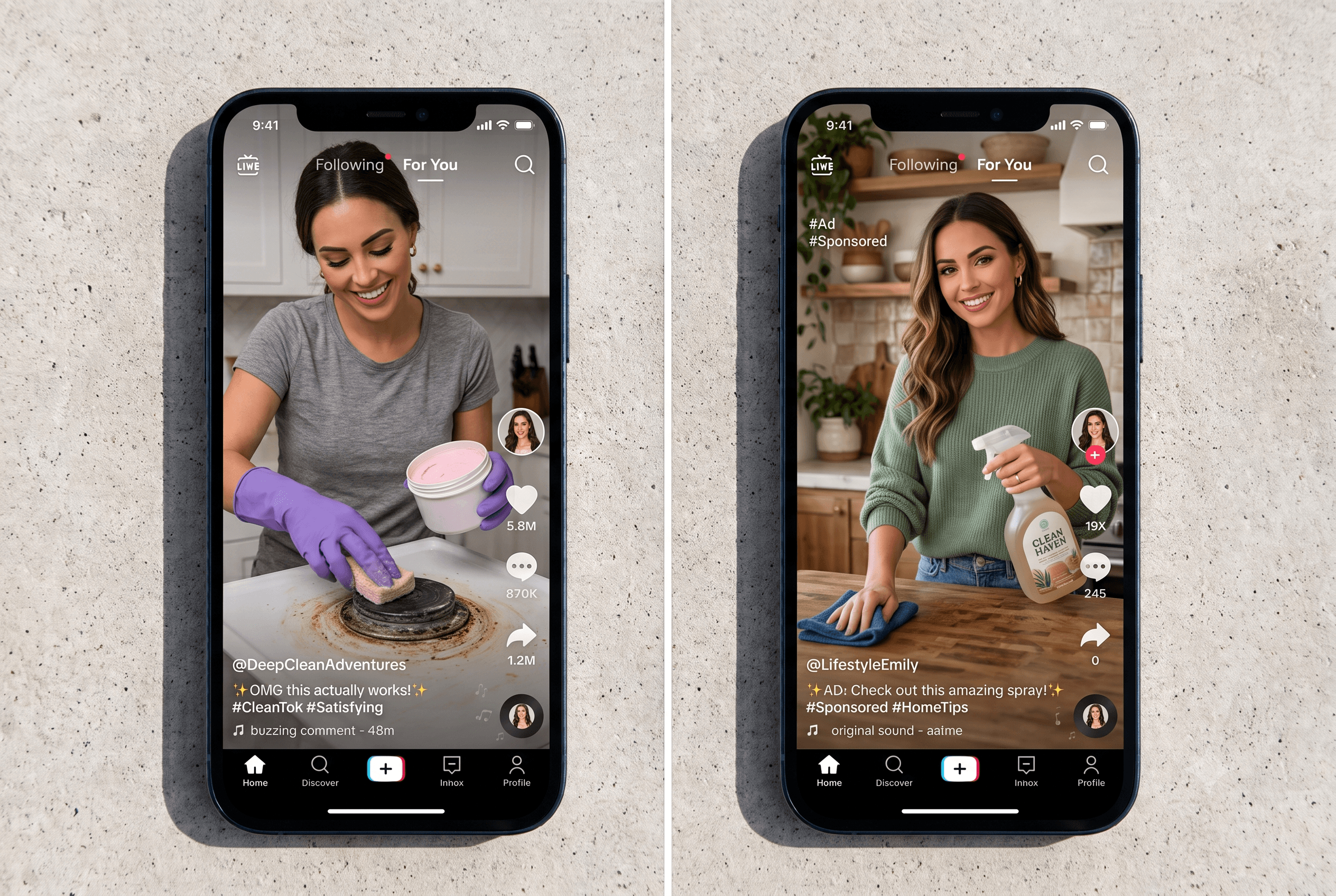
Many of those campaigns have landed somewhere between forgettable and invisible. In many cases, the audience relationship simply wasn't built around product discovery. People were showing up for entertainment, not looking for recommendations on what to buy next. The format looked the same, but the community underneath it wanted something different from its creator.
The easiest thing to see gets the credit
It's easy to misattribute a successful TikTok influencer marketing campaign to its creative choices, because the creative is what's visible. The hook, the trend, the editing pace — these are the things you can point to and study. What rarely makes it into the post-campaign analysis is whether the creator's audience was already inclined to care about the brand before the video was made.
This matters more on TikTok than on most other platforms, because TikTok influencers tend to build audiences around a specific sensibility rather than a broad demographic.
A creator's following isn't just "women 25-34" — it's a particular relationship to a particular kind of content, built through hundreds of videos and a specific tone that a community has chosen to trust.
Two TikTok influencers with similar follower counts and similar content categories can have audiences with almost no behavioral overlap. One reaches people who buy on impulse from a strong visual hook. Another reaches people who research extensively before any purchase decision. Treating them as interchangeable — which is what happens when brands find TikTok influencers by category and follower range alone — is where most influencer marketing strategy breaks down.
Looking beyond the creator
Brands that get consistent results from TikTok influencer marketing spend more time understanding the audience behind the creator. Before a brief is written, they're evaluating whether that audience is likely to care about what the brand actually offers.
That requires going past the surface-level signals that most discovery searches stop at — follower count, content category, average engagement rate — and into the psychographic makeup of the audience itself. What does this creator's audience already believe about this category? What convinces them to act? Which other creators do they already trust, and why? Patterns in audience behavior often answer those questions more clearly than a creator profile ever could.
This is the layer Lickly is built to surface before a TikTok influencer marketing campaign begins. It wouldn't have told a brand exactly which product would catch on inside CleanTok — nothing could have predicted that moment with certainty. But it would have shown which creators in the cleaning and home space had communities oriented toward genuine product trust rather than entertainment, narrowing the field to the ones capable of producing that kind of result before a brand ever committed budget to find out the hard way.
What the best campaigns get right
Creative execution on TikTok rewards what's already true. It doesn't create truth where there isn't any. A native-feeling hook, a well-timed trend, and an editing style that fits the platform can all amplify a campaign that was already built on the right foundation. What they can’t do is manufacture an audience relationship that wasn't there to begin with.
A brand that's done the work of finding the right audience will often look, from the outside, like it simply understood the platform. The video felt native. The creator felt authentic. The timing felt right. More often than not, the audience and creator were simply a good match from the beginning.
Most influencer platforms optimize creator discovery. Lickly optimizes audience alignment. That difference changes every downstream decision — from creator selection to performance outcomes.
Book a demo to see how it works.