The PGA Championship Proved Influence Doesn’t Start on Social

The room already told you whether your pre-event work paid off. Here’s how lean teams read that response and use it. Part 2 of 2.
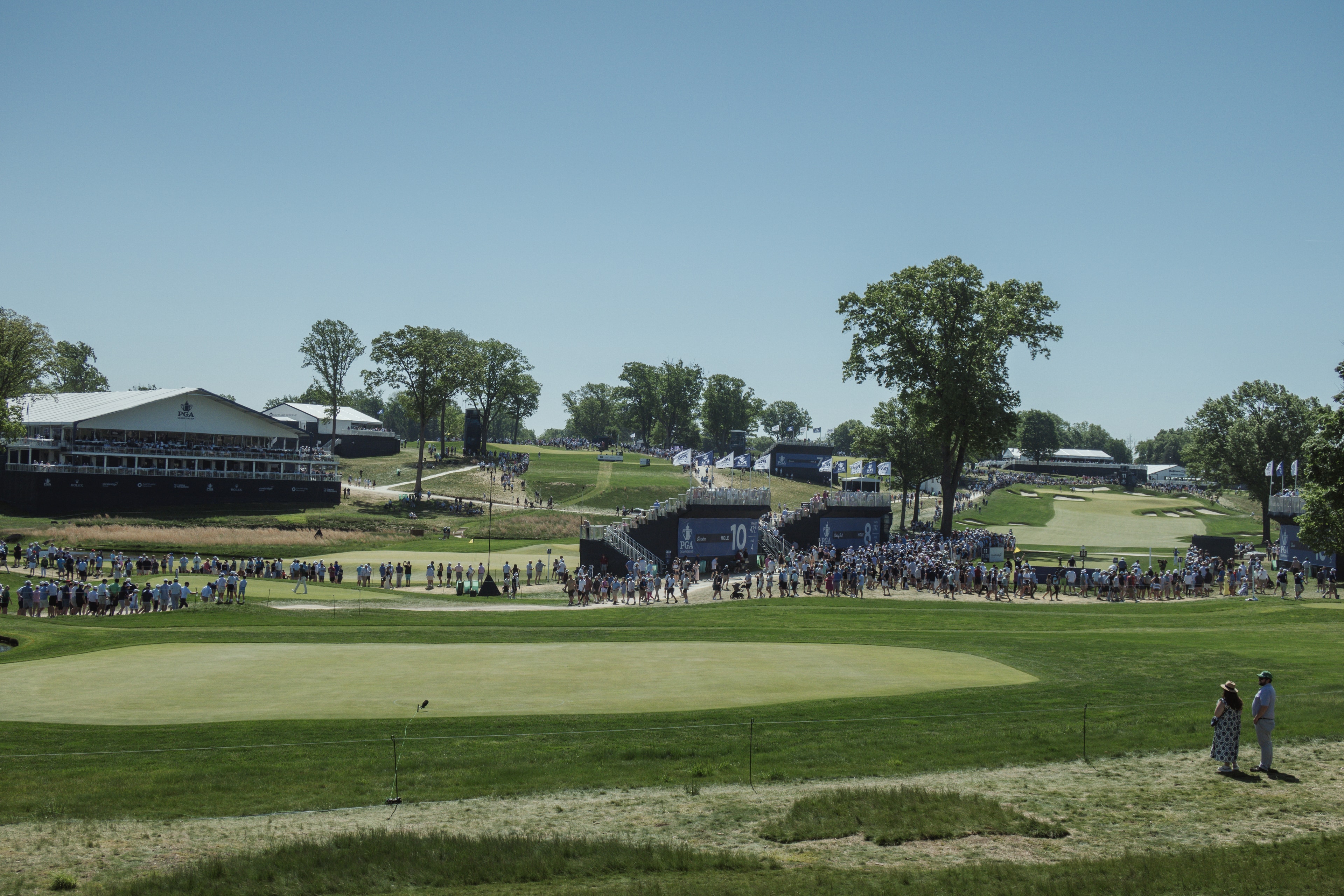
We were at the PGA Championship in May, and a few things became very clear.
The PGA offers an unusual view into how community, credibility and timing actually work. And those dynamics play out the same way whether your moment is a national championship or a regional trade show your audience treats like a must-attend.
We'd done the work before the moment peaked and we could see where it landed. Here's what we took away from it.
What the golf community confirmed
Passionate communities aren’t casual audiences. The golf community. The sneaker community. The home brewing community. The dev tools community. Wherever a group of people has gathered around something they genuinely care about, they've developed the same radar. They can tell almost immediately whether a brand is part of their world or just visiting it.
Social can amplify recognition. It can’t manufacture belonging inside a community that already knows its own signals. By the time content starts circulating, the audience has usually already decided whether you have context or not.
What we saw at the PGA confirmed something we already believed: the intelligence you build before a moment determines the quality of what happens inside it. Presence with context is what compounds into something lasting.
Most of the value created in a room like this never appears in an impressions dashboard. The social metrics came later. The real decision happened earlier. You could feel it in the conversations, in who already understood why we were there and in who didn’t need an explanation.
The question most teams don't ask honestly
Every team walks out of a moment like this with a number. Impressions, booth visits and meetings scheduled. Those numbers are real, but they don't tell you whether the right people saw you, whether they had context for why you belonged there, or whether anything will actually move because of it.
The harder question is whether the community you were trying to reach already knew you when you arrived. For us, that groundwork started well before the PGA did. The conversations that opened naturally came from already understanding who we needed to be in front of.
Visibility lands differently when the audience already has context for who you are.
For a lean team, that difference determines whether the sponsorship creates momentum that lasts, whether the budget is PGA-sized or not.
How lean teams close the loop
Here's what separates teams that get smarter from teams that just move on: they treat the post-event as an input, not a summary. We're doing that now.
That starts with being honest about what actually happened. What landed in the conversations we had, and why? Was it because we'd built credibility in this community before we arrived, or did we get lucky with who we happened to meet? Which relationships opened naturally because there was already genuine overlap, and which ones need more groundwork before they're ready to build on?
Then we go one level deeper. Where did our pre-event intelligence hold up, and where did it miss? We mapped the community well before the event and identified the creators we thought carried real trust with this audience. The PGA just gave us a live test of that hypothesis. Did the creators you worked with actually have pull in the room? Did the audience segments we'd identified respond the way we expected? Did the content that performed well before the event translate into conversations during it?
Those questions have specific answers. And the answers tell us something actionable: which community to go deeper in, which creator relationships are worth building on and how much earlier we need to start next time for it to matter by the time the moment peaks.
The real value comes from carrying that information into the next sequence of decisions. Teams that do it enter every next moment already a step ahead.
What Lickly makes possible
The loop we're describing works at any scale, from community mapping before the moment to signal reading after it. Your moment only needs to matter to your audience, that's the only requirement.
We built Lickly to run that sequence regardless of the size of the moment or the budget behind it. Not a broader creator database. Not more impressions to sort through. The behavioral and cultural intelligence that tells a lean team where they actually belong before any spend moves, and what the community's response confirmed about whether they were right.
For a lean team, that means walking into your next moment having already mapped which communities are forming around your topic, which creators those communities actually trust, and whether the fit is real enough to build on. And it means leaving with something more than a good week — with a sharper map for the one after it.
The room gives you a read you can't get anywhere else. Social content extends the moment. Community recognition determines whether the moment matters in the first place. We made sure we went in prepared enough to actually use it. Lickly is how you can do the same.